Blog

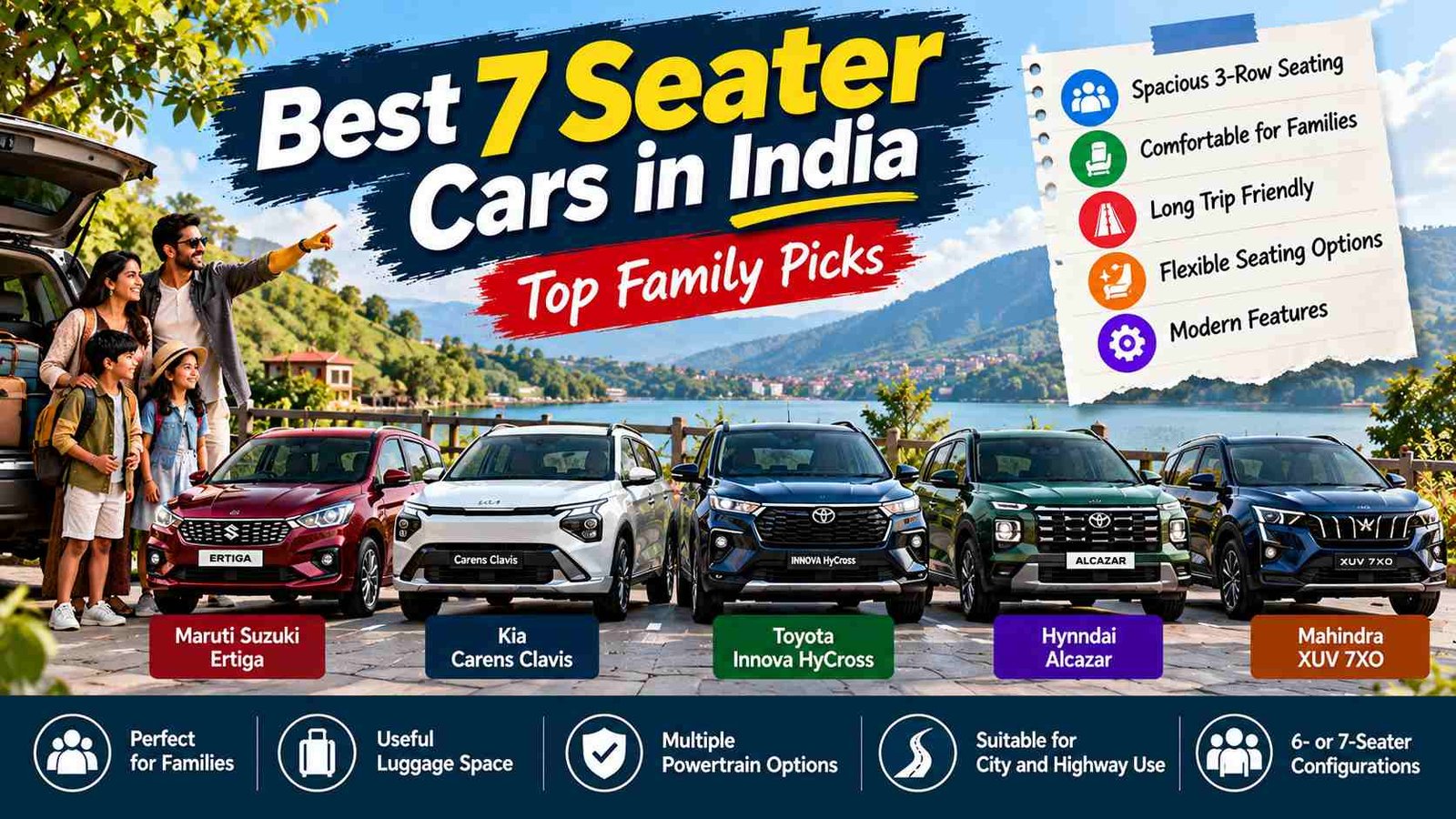
  • Best 7 Seater Cars in India: Top Family Picks

    Best 7 Seater Cars in India: Top Family Picks

    Choosing the right family car becomes more important when you regularly travel with more passengers. A good 7-seater should offer comfortable seating, useful cabin space and enough practicality for everyday family use.

    The best 7-seater cars in India come in different forms, from practical MPVs to premium three-row SUVs. Some focus mainly on space and comfort, while others offer stronger performance, advanced features or better highway capability.

    In this guide, we look at some of the best 7-seater cars worth considering, along with their strengths and the type of family they may suit best.

    1. Maruti Suzuki Ertiga

    The Maruti Suzuki Ertiga is one of the most practical choices for families looking for a relatively compact 7-seater MPV.

    It offers a spacious three-row cabin with flexible seating. The second row gets a 60:40 split arrangement with one-touch recline and slide functionality, while the third row uses a 50:50 split layout with reclining functionality. This makes it easier to balance passenger space and luggage requirements.

    The Ertiga is available with petrol and CNG powertrains. Selected petrol variants also offer a 6-speed automatic transmission with paddle shifters, while the CNG versions are offered with a manual transmission.

    Its 7-seat layout, rear AC and practical cabin make it particularly suitable for families that regularly need extra seating.

    Best for: Families looking for a practical, spacious and easy-to-live-with 7-seater.

    2. Kia Carens Clavis

    The Kia Carens Clavis is aimed at buyers who want a modern, feature-rich family vehicle with flexible seating options.

    The Carens family offers both 6-seat and 7-seat configurations, allowing buyers to choose between captain-seat comfort and a conventional three-row layout. Depending on the selected variant, different petrol and diesel powertrains and automatic transmission options are available.

    The three-row cabin and family-focused design make it suitable for both everyday use and longer journeys.

    Best for: Families who want flexible seating, comfort and modern features.

    3. Toyota Innova HyCross

    The Toyota Innova HyCross is a strong option for larger families who regularly travel long distances.

    The petrol versions offer 7- or 8-seat configurations depending on the variant. Hybrid versions are also available in 7- or 8-seat configurations on selected variants, while the higher ZX and ZX(O) hybrid variants use a 7-seat layout.

    The petrol version uses a Direct Shift CVT, while the hybrid uses Toyota’s e-Drive system. Higher variants can offer features such as automatic climate control, ventilated front seats, powered seating and Toyota Safety Sense, depending on the variant.

    Best for: Families that frequently travel on highways and want a spacious, comfortable MPV.

    4. Hyundai Alcazar

    The Hyundai Alcazar is a good choice for buyers who prefer an SUV-style family vehicle with three-row seating.

    It is available in both 6-seat and 7-seat configurations. Depending on the selected powertrain and variant, buyers can choose between petrol and diesel engines along with manual, automatic and DCT transmission options.

    The Alcazar also offers features such as sliding and reclining second-row seats, a 50:50 split third row and a range of technology and safety features depending on the variant.

    Best for: Families who want an SUV design with flexible seating and premium features.

    5. Mahindra XUV 7XO

    The Mahindra XUV 7XO is a larger SUV option for families looking for three-row seating and strong performance.

    The XUV 7XO is offered with 7-seat configurations across several variants, while selected higher variants are also available with 6-seat layouts. Seating availability depends on the variant.

    Depending on the variant, buyers can choose petrol or diesel powertrains along with manual or automatic transmissions. Higher variants can also offer features such as advanced driver-assistance systems, adaptive cruise control and AWD, depending on the configuration.

    Best for: Families who want a larger SUV with strong performance, three-row seating and a wide range of available features.

    Quick Comparison

    CarSeatingBest For
    Maruti Suzuki Ertiga7Practical family use
    Kia Carens Clavis6/7Comfort and flexible seating
    Toyota Innova HyCross7/8 or 7Long trips and spacious family travel
    Hyundai Alcazar6/7SUV-style family travel
    Mahindra XUV 7XO6/7Large SUV with strong features

    Which 7 Seater Car Should You Choose?

    The right 7-seater depends on how you plan to use the car.

    Choose the Maruti Suzuki Ertiga if practicality, family usability, seating flexibility and relatively easy everyday driving are your main priorities.

    Choose the Kia Carens Clavis if you want a family vehicle with flexible 6- and 7-seat options, a comfortable cabin and modern features.

    Choose the Toyota Innova HyCross if you regularly travel long distances and want a spacious vehicle focused on family touring and comfort.

    Choose the Hyundai Alcazar if you prefer an SUV-style design with flexible seating, premium features and multiple powertrain options.

    Choose the Mahindra XUV 7XO if you want a larger SUV with strong performance, three-row seating and a wide range of technology and feature options.

    What Should You Check Before Buying a 7 Seater?

    Buying a 7-seater is not only about the number of seats. Consider these factors before making a decision.

    Third-Row Comfort

    Check whether the third row is comfortable enough for the passengers who will actually use it.

    Pay attention to legroom, headroom, seat cushioning and how easy it is to get into and out of the third row.

    Cabin Space

    Look at second- and third-row space instead of judging the car only by its exterior size.

    A vehicle may have three rows but still feel cramped when all seats are occupied.

    Boot Space

    Check how much luggage space remains when all three rows are being used.

    This is particularly important if your family regularly travels with multiple bags.

    Seating Flexibility

    Sliding, reclining and split-folding seats can make it easier to balance passenger comfort and luggage space.

    If you frequently carry different numbers of passengers, flexible seating can be very useful.

    Fuel Type

    Consider whether petrol, diesel, CNG or hybrid power suits your driving pattern.

    Think about your daily distance, highway usage, fuel availability and expected running costs.

    Automatic or Manual

    An automatic transmission can be convenient in heavy city traffic, while a manual may appeal to buyers who prefer greater control or want a different balance between purchase cost and driving preference.

    Safety Features

    Check the safety equipment of the exact variant you are considering.

    Features can vary considerably between variants, so do not assume that equipment available on a higher variant is standard across the entire range.

    Service Network

    A strong service network can make ownership easier, especially if you frequently travel outside your home city.

    This is particularly important for families who use their vehicle for long-distance travel.

    On-Road Price

    Do not compare cars only by their ex-showroom prices.

    Registration charges, insurance, taxes, accessories and other costs can make a noticeable difference to the final on-road price.

    Test Drive

    Always take a proper test drive before making a decision.

    If possible, take your family with you and check the second- and third-row comfort, luggage space, visibility, ease of entry and exit, and overall driving experience.

    Frequently Asked Questions

    Which is the best 7 seater car in India?

    There is no single best 7-seater for every buyer. The Ertiga is a practical family MPV, the Innova HyCross is well suited to long-distance family travel, while the Alcazar and XUV 7XO offer SUV-style alternatives.

    Which 7 seater is best for a large family?

    A spacious MPV or SUV with a genuinely usable third row can be a good choice for a large family. The Toyota Innova HyCross, Kia Carens Clavis and Maruti Suzuki Ertiga are worth considering depending on your budget and requirements.

    Is a 7 seater good for long trips?

    A 7-seater can be excellent for long trips if the third row is reasonably comfortable and there is enough luggage space.

    Features such as rear AC, comfortable seats and cruise control can also make longer journeys more convenient, depending on the vehicle and variant.

    Is an MPV better than an SUV for a family?

    Not necessarily.

    MPVs generally focus more on cabin space, seating flexibility and family practicality, while SUVs may offer a higher driving position, different styling and stronger road presence.

    The better choice depends on your family’s needs, driving conditions and budget.

    Should I buy a 6 seater or 7 seater?

    A 6-seater with captain seats can offer more individual space and comfort, while a 7-seater generally provides greater seating flexibility.

    If you regularly carry seven people, a 7-seater may be the more practical choice.

    What is the most important thing to check in a 7 seater?

    Third-row usability is one of the most important things to check.

    Do not judge a three-row vehicle only from the first two rows. Sit in the third row, check access, legroom and headroom, and see how much luggage space remains when all seats are occupied.

    Final Thoughts

    The best 7-seater car should match your family’s actual needs rather than simply offering the highest number of features.

    For practical everyday family use, the Maruti Suzuki Ertiga is worth considering. The Kia Carens Clavis offers flexible seating and family-focused comfort, while the Toyota Innova HyCross is particularly appealing for frequent long-distance travel.

    For buyers who prefer SUVs, the Hyundai Alcazar and Mahindra XUV 7XO provide different approaches to three-row family motoring.

    Before buying, compare the exact variants, seating layout, safety equipment, fuel type, running costs and on-road price.

    Most importantly, take a proper test drive and check the third row with your family before making the final decision.

    Views: 0
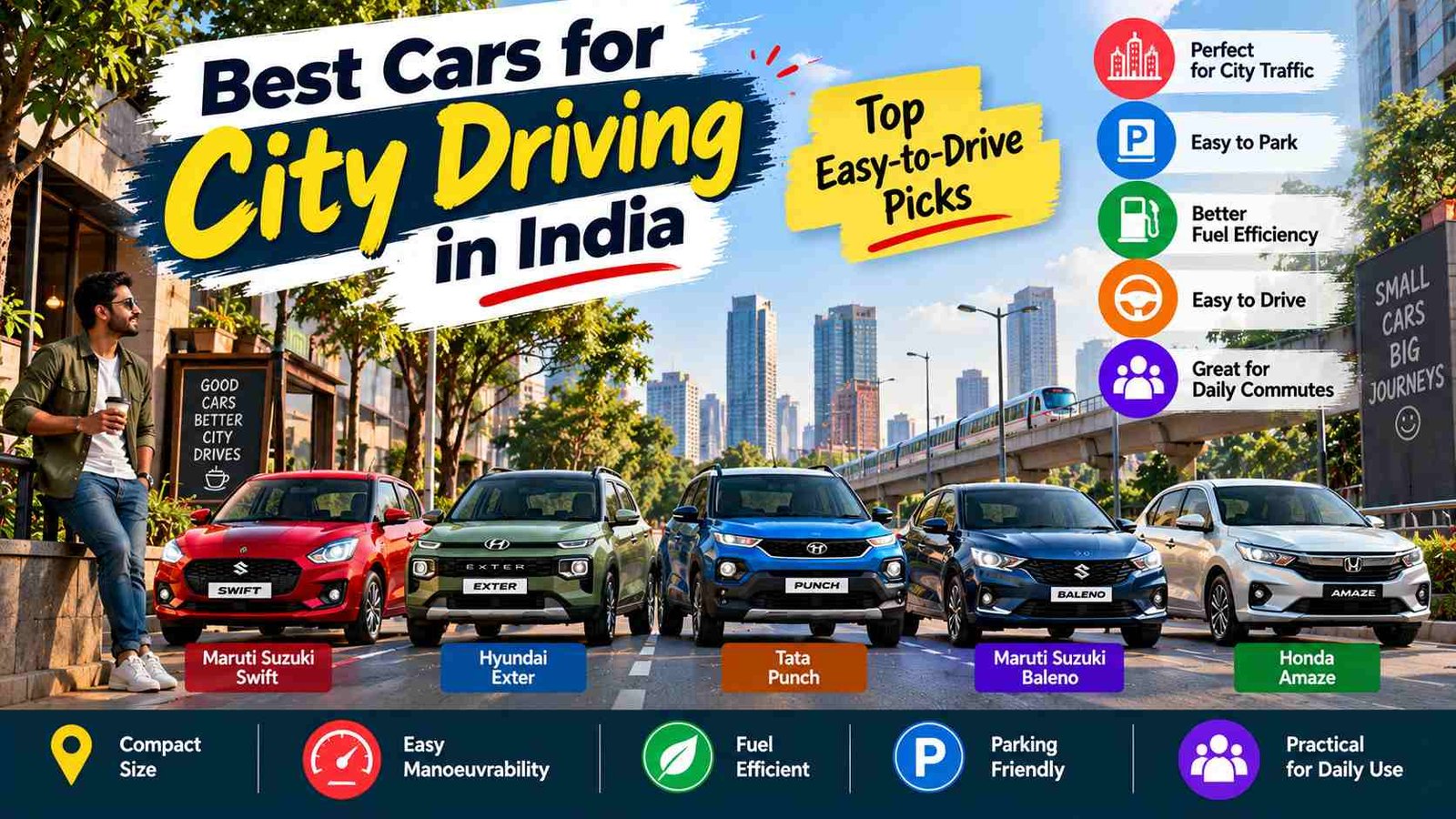
  • Best Cars for City Driving in India: Top Easy-to-Drive Picks

    Best Cars for City Driving in India: Top Easy-to-Drive Picks

    City driving in India can be challenging. Heavy traffic, narrow roads, limited parking space and frequent stops can make everyday driving tiring.

    For urban use, a car does not necessarily need to be large or powerful. Compact dimensions, good visibility, easy manoeuvrability, a comfortable cabin and efficient performance can be more useful for daily city driving.

    An automatic transmission can also make a difference in busy traffic, while features such as rear parking sensors and a reversing camera can make everyday manoeuvring easier.

    In this guide, we look at some of the best cars for city driving in India and explain what makes each one worth considering.

    1. Maruti Suzuki Swift

    The Maruti Suzuki Swift is a practical choice for city driving because of its compact dimensions, easy manoeuvrability and available automatic transmission.

    The Swift measures 3,860 mm in length and 1,735 mm in width. It is available with a 5-speed manual transmission and AGS automatic options. Maruti Suzuki lists claimed fuel efficiency of up to 25.75 km/l for the petrol AMT version. The CNG version is also available for buyers who prioritise fuel economy.

    Depending on the variant, the Swift offers features such as rear AC vents, 60:40 split rear seats, hill-hold assist, reverse camera and six airbags. Equipment can vary by variant.

    Its compact footprint and automatic option make it a sensible choice for daily urban commuting.

    Best for: Buyers looking for a compact and efficient city hatchback.

    2. Hyundai Exter

    The Hyundai Exter is a compact SUV-style car designed for everyday urban use.

    It uses a 1.2-litre petrol engine and is available with a 5-speed manual transmission or 5-speed AMT. A CNG version is also available with a 5-speed manual transmission.

    The Exter measures 3,830 mm in length and 1,723 mm in width, which can be useful when navigating crowded roads and parking spaces.

    Depending on the variant, it offers features such as a digital instrument cluster, wireless smartphone connectivity, connected-car technology and wireless charging. Safety equipment varies by variant.

    Best for: City buyers who prefer an SUV-style design in a compact package.

    3. Tata Punch

    The Tata Punch is another strong option for urban driving, especially for buyers who prefer a compact SUV-style vehicle.

    Its relatively compact dimensions and SUV-inspired design can make it suitable for city roads, while its 193 mm ground clearance can be useful on speed breakers and uneven surfaces. Tata Motors lists the Punch at 3,876 mm long and 1,742 mm wide.

    The Punch is available with petrol and CNG powertrains, depending on the variant. Tata Motors also offers a 5-speed manual and 5-speed AMT, with availability depending on the powertrain and variant.

    Depending on the variant, features include rear parking sensors, a rear camera, cruise control and connected-car technology.

    Best for: Buyers who want a compact SUV with a higher-riding driving position.

    4. Maruti Suzuki Baleno

    The Maruti Suzuki Baleno is a practical premium hatchback for buyers who want more cabin space while still keeping a relatively compact footprint.

    The current Baleno is available with a 5-speed manual transmission and AGS automatic transmission. Maruti Suzuki also offers a CNG version with a manual transmission. The company lists claimed fuel efficiency of up to 24.77 km/l for the AGS version and 33.61 km/kg for the CNG manual version.

    The Baleno can therefore suit buyers who want a hatchback for daily commuting while also needing useful cabin space and an automatic option.

    Best for: Small families and daily commuters who want a spacious hatchback.

    5. Honda Amaze

    The Honda Amaze is a good option for city buyers who prefer a sedan rather than a hatchback or SUV.

    The current Amaze uses a 1.2-litre petrol engine and is available with a CVT automatic transmission. Honda lists a 416-litre boot, which can be useful for families carrying luggage or shopping.

    Honda’s official technical information lists a turning-circle radius of 4.7 metres for the V variant and 4.9 metres for the VX and ZX variants. This can be useful when manoeuvring through tighter roads and parking areas.

    The Amaze also offers features such as Honda SENSING ADAS, six airbags and a reversing camera, depending on the variant.

    Best for: Buyers who want the comfort and boot space of a sedan for everyday city use.

    Quick Comparison

    CarBody StyleBest For
    Maruti Suzuki SwiftHatchbackEasy city driving and efficiency
    Hyundai ExterCompact SUVSUV-style city driving
    Tata PunchCompact SUVUrban roads and higher seating
    Maruti Suzuki BalenoHatchbackSpace and daily commuting
    Honda AmazeSedanBoot space and comfortable city driving

    Which Car Should You Choose for City Driving?

    The best city car depends on your priorities, budget, family requirements and daily driving conditions.

    If you want a compact hatchback with an automatic option and strong claimed fuel efficiency, the Maruti Suzuki Swift is worth considering.

    If you prefer an SUV-like driving position without moving to a larger SUV, the Hyundai Exter and Tata Punch are practical options.

    For buyers who want a spacious hatchback with an automatic option, the Maruti Suzuki Baleno can be a good fit.

    If boot space and sedan comfort are more important to you, the Honda Amaze is worth considering.

    What Makes a Car Good for City Driving?

    Before choosing a city car, look beyond the price and appearance. Several practical factors can make a big difference in everyday use.

    Compact Dimensions

    A compact car is generally easier to manoeuvre through narrow streets and crowded areas.

    It can also be easier to park in tight spaces, although the actual experience depends on visibility, steering and parking assistance.

    Automatic Transmission

    If you regularly drive in heavy traffic, an automatic transmission can reduce the effort involved in constantly operating a clutch and changing gears.

    AMT, CVT and other automatic systems have different characteristics, so a proper test drive is important before buying.

    Turning Radius

    A smaller turning radius can make U-turns, tight corners and parking manoeuvres easier.

    However, turning radius should be considered together with steering weight, visibility and the overall dimensions of the car.

    Fuel Efficiency

    City driving often involves frequent acceleration, braking and idling. A fuel-efficient car can therefore help reduce running costs.

    Remember that official fuel-efficiency figures are obtained under controlled testing conditions. Real-world mileage can vary depending on traffic, driving style, road conditions, air-conditioning use and vehicle load.

    Parking Features

    Rear parking sensors, a reversing camera and good visibility around the car can be extremely useful in crowded urban areas.

    These features do not replace careful driving, but they can make parking and low-speed manoeuvring easier.

    Ground Clearance

    Indian city roads can include speed breakers, potholes and uneven surfaces.

    Adequate ground clearance can be useful, but buyers should also consider ride comfort and suspension behaviour rather than focusing only on the clearance figure.

    What Should You Check Before Buying a City Car?

    Before buying a car mainly for urban use, consider:

    • Car dimensions: Make sure the car is comfortable for your regular roads and parking spaces.
    • Transmission: Consider whether manual or automatic driving suits your traffic conditions.
    • Fuel efficiency: Compare the certified efficiency of the exact variant.
    • Parking assistance: Check for rear sensors, a reversing camera and other useful features.
    • Visibility: Make sure you can comfortably see the front, sides and rear of the vehicle.
    • Turning radius: This can matter when making U-turns or navigating narrow roads.
    • Ground clearance: Useful for speed breakers and uneven roads.
    • Rear-seat space: Important if the car will regularly carry family members.
    • Boot space: Consider how much luggage you normally carry.
    • Safety: Check the safety equipment of the exact variant you plan to buy.
    • Service network: A convenient service centre can make ownership easier.
    • On-road price: Compare the final on-road cost rather than only the advertised ex-showroom price.
    • Test drive: Drive the exact variant before making your final decision.

    Frequently Asked Questions

    Which is the best car for city driving in India?

    There is no single best city car for everyone. The Maruti Suzuki Swift, Hyundai Exter, Tata Punch, Maruti Suzuki Baleno and Honda Amaze can suit different types of city-car buyers.

    Which car is easiest to drive in heavy traffic?

    A car with compact dimensions and an automatic transmission can make heavy traffic easier to manage. The right choice depends on your budget, driving conditions and preferred transmission type.

    Is an automatic car better for city driving?

    An automatic can be more convenient in stop-and-go traffic because the driver does not need to operate a clutch pedal or manually change gears. However, different automatic transmissions provide different driving experiences.

    Which type of car is better for city driving: hatchback or SUV?

    A hatchback is generally easier to manoeuvre and park because of its compact footprint. A compact SUV can offer a higher seating position and additional ground clearance. The better choice depends on your priorities.

    What is more important for a city car: mileage or performance?

    For most daily city commuters, efficiency, easy manoeuvrability and comfortable low-speed driving can be more useful than outright performance. However, buyers who regularly use highways should also consider highway performance.

    Final Thoughts

    A good city car should make everyday driving easier rather than simply offering the biggest engine or longest feature list.

    The Maruti Suzuki Swift is a strong compact hatchback choice, while the Hyundai Exter and Tata Punch offer SUV-style practicality in relatively compact packages.

    The Maruti Suzuki Baleno can suit buyers who want more hatchback space, while the Honda Amaze is a sensible option for those who prefer a sedan with useful boot space.

    Before buying, consider your daily route, traffic conditions, parking situation, fuel costs, transmission preference and family requirements. Most importantly, take a proper test drive of the exact variant before making your final decision.

    Views: 0

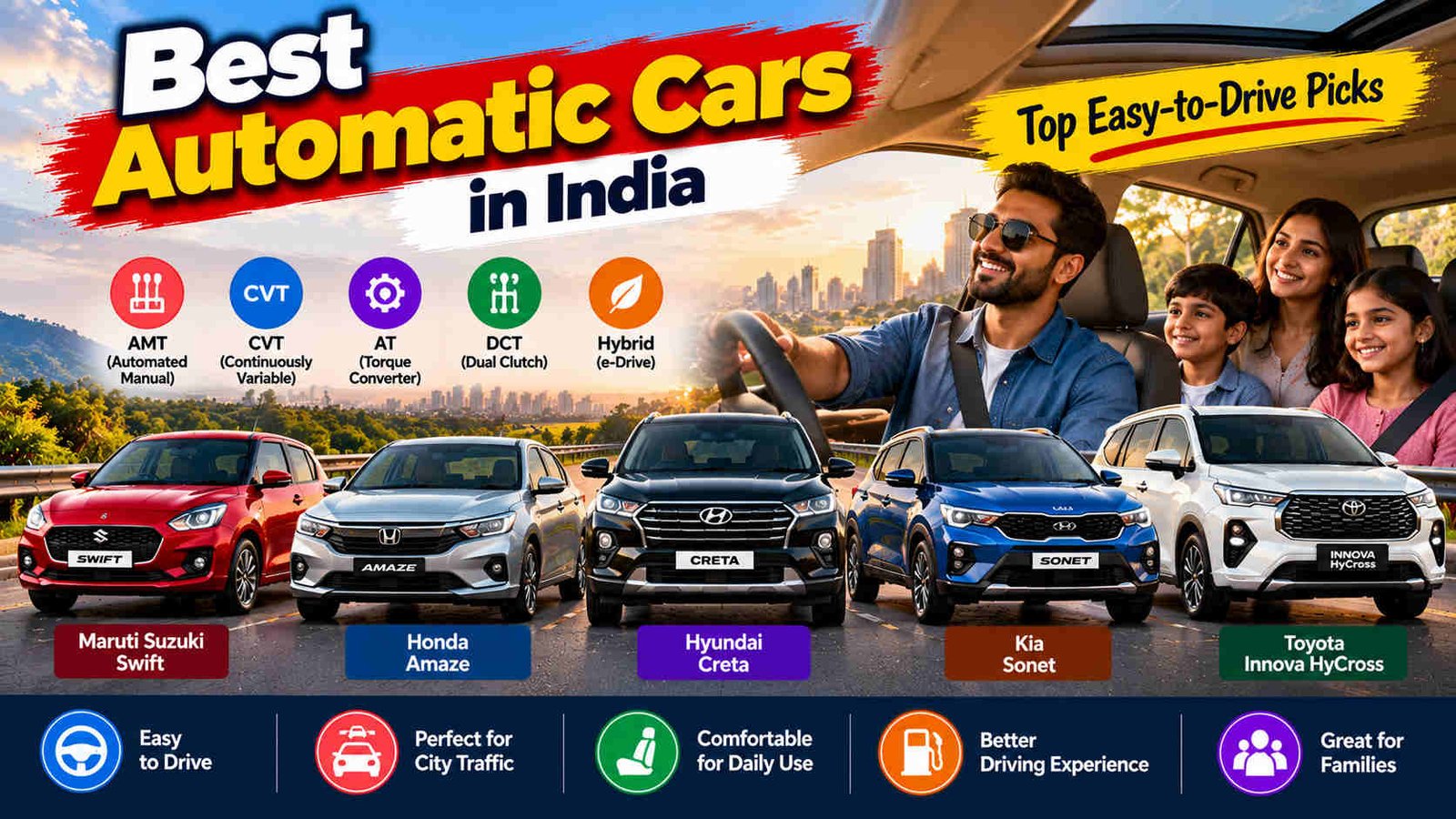
  • Best Automatic Cars in India: Top Easy-to-Drive Picks

    Best Automatic Cars in India: Top Easy-to-Drive Picks

    Automatic cars can make everyday driving easier, especially in busy city traffic where frequent acceleration, braking and gear changes can become tiring.

    Unlike a manual car, an automatic does not require the driver to operate a clutch pedal or manually change gears. This can make stop-and-go driving more convenient and comfortable.

    However, not all automatic transmissions feel the same. AMT, CVT, torque-converter automatic and DCT systems have different characteristics, and the right choice depends on your driving conditions, budget and preferences.

    In this guide, we look at some of the best automatic cars in India and explain what each one is best suited for.

    1. Maruti Suzuki Swift

    The Maruti Suzuki Swift is a practical automatic car for buyers who want a compact hatchback that is easy to drive in the city.

    The Swift is available with an Automated Manual Transmission (AGS), giving buyers the convenience of two-pedal driving in a compact hatchback. Selected CNG variants are also available with AGS.

    Its compact dimensions make the Swift easy to manoeuvre and park in crowded urban areas. Depending on the variant, it also offers features such as cruise control, rear AC vents and wireless smartphone connectivity. Maruti Suzuki also lists six airbags as standard equipment.

    Best for: City driving and buyers looking for an easy-to-drive automatic hatchback.

    2. Honda Amaze

    The Honda Amaze is a practical automatic sedan for buyers who want a comfortable car with a CVT automatic transmission.

    Its 1.2-litre petrol engine is available with a CVT automatic, making it suitable for relaxed city driving. The Amaze also offers a 416-litre boot, which can be useful for families who regularly carry luggage.

    Depending on the variant, features include Honda SENSING ADAS, six airbags, LaneWatch and paddle shifters with the CVT.

    The combination of a sedan body, comfortable automatic transmission and useful boot space makes the Amaze worth considering for family and everyday use.

    Best for: Small families and buyers who want a comfortable automatic sedan.

    3. Hyundai Creta

    The Hyundai Creta is a strong choice for buyers who want an automatic SUV with several transmission options.

    The 1.5-litre naturally aspirated petrol engine can be paired with an IVT automatic, the diesel engine is available with a 6-speed automatic, and the 1.5-litre turbo-petrol engine gets a 7-speed DCT automatic. This gives buyers more flexibility depending on their driving requirements.

    Depending on the variant, the Creta also offers features such as cruise control, automatic climate control, connected-car technology and ventilated front seats. Higher automatic variants can offer smart cruise control with stop-and-go functionality.

    Best for: Families looking for a comfortable SUV with multiple automatic options.

    4. Kia Sonet

    The Kia Sonet is a compact SUV that offers several automatic transmission choices.

    Depending on the engine and variant, the Sonet is available with a 7-speed DCT and a 6-speed automatic. The diesel engine is also available with a 6-speed automatic, giving buyers another option for combining diesel power with automatic convenience.

    The Sonet also offers features such as cruise control, automatic climate control, ventilated front seats and available ADAS technology on higher variants.

    This makes it an interesting option for buyers who want a compact SUV with a wide choice of automatic powertrain combinations.

    Best for: Buyers who want a feature-rich compact SUV with automatic options.

    5. Toyota Innova HyCross

    The Toyota Innova HyCross is a larger automatic vehicle for buyers who prioritise cabin space, family comfort and flexible seating.

    The petrol version uses a Direct Shift CVT, while the hybrid version uses Toyota’s e-Drive system. Depending on the variant, the Innova HyCross is available with seven- or eight-seat configurations.

    Higher variants offer features such as automatic climate control, powered seats, comfort-focused second-row seating and other premium equipment. The larger cabin and flexible seating make it particularly suitable for family travel.

    Best for: Large families and buyers looking for a spacious automatic family vehicle.

    Quick Comparison

    CarAutomatic TypeBest For
    Maruti Suzuki SwiftAGS / AMTCity driving
    Honda AmazeCVTComfortable sedan driving
    Hyundai CretaIVT / AT / DCTAutomatic SUV buyers
    Kia Sonet6AT / 7DCTFeature-rich compact SUV
    Toyota Innova HyCrossCVT / e-DriveLarge family travel

    Which Automatic Car Should You Choose?

    The right automatic car depends on your budget, driving conditions, family size and preferred driving experience.

    If you mainly drive in crowded city traffic and want a compact car, the Maruti Suzuki Swift is a practical option because of its small footprint and automatic convenience.

    If you prefer a sedan with smooth automatic driving and useful boot space, the Honda Amaze is worth considering.

    For buyers who want an SUV with several automatic transmission choices, the Hyundai Creta offers considerable flexibility.

    If you want a compact SUV with multiple automatic powertrain options and a strong feature list, the Kia Sonet is another option worth considering.

    For larger families who need more cabin space and flexible seating, the Toyota Innova HyCross is a more spacious automatic choice.

    What Are the Different Types of Automatic Transmissions?

    Understanding the basic types of automatic transmissions can help you choose a car that matches your driving style.

    AMT

    AMT stands for Automated Manual Transmission.

    It is based on a manual gearbox but uses automated systems to operate the clutch and change gears. AMTs are commonly used in more affordable cars because they can provide automatic convenience without the complexity of some other automatic systems.

    AMTs can work well for city driving, although gear changes may sometimes feel more noticeable than with a CVT or conventional automatic.

    CVT

    CVT stands for Continuously Variable Transmission.

    Instead of using a fixed set of traditional gears, a CVT continuously varies the transmission ratio. This can provide smooth acceleration and make it well suited to relaxed city driving.

    However, engine speed can rise noticeably during hard acceleration, which may feel different from a conventional automatic.

    Torque-Converter Automatic

    A torque-converter automatic uses a fluid coupling and fixed gears.

    It is known for smooth take-offs and predictable gear changes and can work well in both city traffic and highway driving. Torque-converter automatics are commonly found in SUVs and larger vehicles.

    DCT

    DCT stands for Dual-Clutch Transmission.

    A DCT uses two clutches to manage different gear sets and can provide quick gear changes and responsive acceleration.

    It can be attractive to drivers who prefer a more responsive driving experience. However, buyers who frequently drive in slow-moving, stop-and-go traffic should take a proper test drive and understand how the particular DCT behaves at low speeds.

    Hybrid Automatic / e-Drive

    Strong-hybrid vehicles can use an electrically driven transmission system rather than a conventional stepped automatic.

    These systems can provide smooth power delivery and work particularly well with hybrid powertrains. The Toyota Innova HyCross, for example, uses an e-Drive transmission with its hybrid powertrain.

    What Should You Check Before Buying an Automatic Car?

    Don’t choose an automatic car only because it is easier to drive. Consider these factors before making a purchase:

    • Transmission type: Understand whether the car uses AMT, CVT, AT, DCT or a hybrid automatic system.
    • City traffic: If you spend a lot of time in stop-and-go traffic, smooth low-speed behaviour is particularly important.
    • Highway driving: Consider acceleration, overtaking response and highway stability if you regularly travel long distances.
    • Fuel efficiency: Compare the certified efficiency of the exact automatic variant you are considering.
    • Maintenance: Check the recommended service schedule and ask about long-term maintenance requirements.
    • Service network: A strong service network can make ownership easier, particularly if you travel frequently.
    • Boot space: Check the actual usable luggage space, especially if you are considering a family car.
    • Hill driving: If you regularly drive on steep roads, check how the transmission behaves during uphill starts and slow-speed driving.
    • Safety: Compare the safety equipment of the exact variant rather than judging only by the model name.
    • Price difference: Compare the automatic variant with the equivalent manual version and decide whether the additional cost is worthwhile for your usage.
    • Test drive: Always test-drive the automatic version before buying. Pay attention to low-speed smoothness, acceleration, braking and gear-shift behaviour.

    Frequently Asked Questions

    Which is the best automatic car in India?

    There is no single best automatic car for everyone. The right choice depends on your budget, driving conditions, family size and preferred transmission type.

    Which automatic car is best for city driving?

    A compact automatic car such as the Maruti Suzuki Swift can be a practical choice for city driving because of its compact dimensions and automatic convenience.

    Is AMT better than CVT?

    Neither is universally better. AMT can be a cost-effective automatic option, while CVT generally focuses more on smooth and relaxed acceleration. Your traffic conditions, driving style and budget should determine which one suits you.

    Is an automatic car good for long drives?

    Yes. Automatic cars can be comfortable for long drives because the driver does not need to operate a clutch or manually change gears. However, the comfort and performance depend on the particular car and transmission.

    Are automatic cars more expensive to maintain?

    Maintenance costs vary by model and transmission type. Some automatic systems have different service requirements from manual gearboxes, so buyers should check the manufacturer’s recommended maintenance schedule before purchasing.

    Final Thoughts

    An automatic car can make everyday driving much easier, particularly in busy urban traffic.

    The Maruti Suzuki Swift is a practical compact option, the Honda Amaze offers a comfortable automatic sedan experience, and the Hyundai Creta provides several automatic transmission choices in an SUV package.

    The Kia Sonet is worth considering for buyers who want a feature-rich compact SUV with multiple automatic options, while the Toyota Innova HyCross is better suited to larger families looking for space and automatic convenience.

    Before buying, compare the transmission type, exact variant, safety equipment, running costs, service requirements and on-road price. Most importantly, take a proper test drive so you can understand how the automatic transmission behaves in the traffic and roads where you normally drive.

    Views: 0

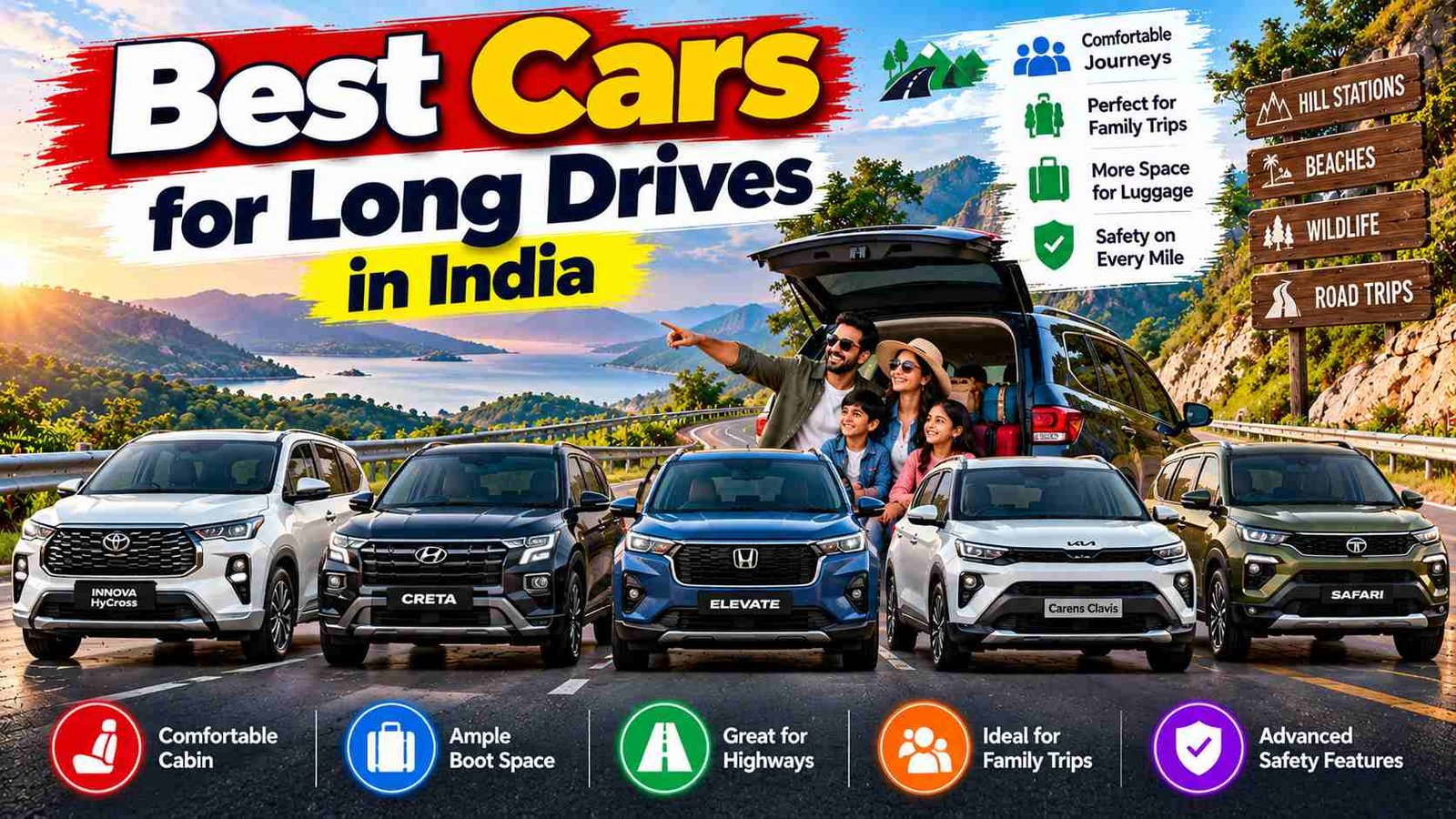
  • Best Cars for Long Drives in India: Top Comfortable Picks

    Best Cars for Long Drives in India: Top Comfortable Picks

    Long drives can be much more enjoyable when a car offers a comfortable cabin, supportive seats, good highway stability and enough space for passengers and luggage.

    For Indian road trips, factors such as ride comfort, boot space, driving position, fuel efficiency, safety features and highway convenience can make a significant difference.

    In this guide, we look at some of the best cars for long drives in India and explain what makes each one worth considering for highway journeys and family road trips.

    1. Toyota Innova HyCross

    The Toyota Innova HyCross is a practical choice for long-distance family travel.

    Depending on the variant, it is available with seven- or eight-seat configurations. Higher variants also offer features such as automatic climate control, ventilated front seats, and Toyota Safety Sense features on applicable versions.

    Its spacious cabin and flexible seating options make the Innova HyCross particularly suitable for families who regularly travel long distances.

    Best for: Family road trips and buyers who prioritise space and comfort.

    2. Hyundai Creta

    The Hyundai Creta is a strong option for buyers who want a comfortable SUV for both city driving and highway journeys.

    Depending on the variant, the Creta offers features such as cruise control, dual-zone automatic temperature control, ventilated front seats, connected-car technology and larger infotainment displays. Higher automatic variants can also offer smart cruise control with stop-and-go functionality.

    Its comfortable cabin and SUV driving position make it suitable for everyday use as well as longer highway trips.

    Best for: Families looking for a comfortable and feature-rich SUV.

    3. Honda Elevate

    The Honda Elevate is a practical SUV for buyers who enjoy highway driving and longer road journeys.

    It offers a 458-litre boot and a 1.5-litre petrol engine with manual and CVT transmission options. Honda SENSING is also available and includes driver-assistance technologies such as Adaptive Cruise Control, Lane Keeping Assist and Auto High-Beam.

    The combination of boot space, driving position and available driver-assistance technology makes the Elevate worth considering for highway users.

    Best for: Highway users who want comfort, boot space and available driver-assistance features.

    4. Kia Carens Clavis

    The Kia Carens Clavis is designed with family travel and three-row practicality in mind.

    Depending on the variant, it offers six- or seven-seat configurations along with features designed to improve passenger comfort and interior flexibility.

    Its three-row layout makes it useful for families who regularly travel with several passengers and need more seating space.

    Best for: Larger families and buyers who need three-row practicality.

    5. Tata Safari

    The Tata Safari is another option worth considering for buyers who want a spacious SUV for highway journeys and family travel.

    It is available in six- and seven-seat configurations depending on the variant. Selected automatic variants also offer Adaptive Cruise Control, while higher variants provide additional comfort, entertainment and safety features.

    Its larger cabin and three-row layout make it suitable for families who want more passenger space during longer journeys.

    Best for: Families looking for a large SUV with three-row practicality.

    Quick Comparison

    CarBest ForKey Highlight
    Toyota Innova HyCrossFamily road tripsSpacious cabin and 7/8-seat options
    Hyundai CretaComfortable SUV travelComfort and useful highway features
    Honda ElevateHighway driving458-litre boot and available ADAS
    Kia Carens ClavisLarger families6/7-seat flexibility
    Tata SafariLarge family tripsSpacious three-row SUV

    Which Car Is Best for Long Drives?

    The best car for long drives depends on your family size, driving style, budget and the type of roads you regularly use.

    If you frequently travel with a large family, the Toyota Innova HyCross is a strong option because of its spacious cabin and flexible seating configurations.

    If you want a comfortable SUV that works equally well for everyday driving, the Hyundai Creta is worth considering for its cabin comfort and available highway-oriented features.

    For buyers who prioritise highway driving, boot space and available driver-assistance features, the Honda Elevate can be an attractive choice.

    If you regularly travel with several passengers and need three rows, the Kia Carens Clavis offers useful seating flexibility.

    For buyers who want a larger SUV with three-row practicality, the Tata Safari is another option worth considering.

    What Should You Check Before Buying a Car for Long Drives?

    A car that feels comfortable for a short city trip may not necessarily be ideal for a long highway journey. Before buying, consider:

    • Seat comfort: Check whether the front and rear seats provide enough support for several hours of driving.
    • Rear-seat space: Make sure passengers have enough legroom and headroom.
    • Boot space: Check whether the boot can accommodate luggage for the whole family.
    • Highway stability: A stable and predictable car can make long highway drives more comfortable.
    • Ride quality: Good suspension can reduce fatigue on uneven roads.
    • Cruise control: This can be useful on suitable highways and long stretches of road, while the driver remains fully attentive.
    • Safety features: Check airbags, stability control, braking technology and available driver-assistance systems.
    • Fuel efficiency: Consider the vehicle’s fuel type and expected running costs.
    • Air-conditioning: Effective climate control and rear AC vents can be especially useful during family trips.
    • Storage and charging: Look for convenient storage spaces, USB ports and other features passengers may need during longer journeys.
    • Service network: A strong service network can be valuable when travelling between cities.
    • Test drive: Take a proper test drive and pay attention to seat comfort, visibility, steering, ride quality and cabin noise.

    Frequently Asked Questions

    Which is the best car for long drives in India?

    There is no single best car for every driver. The Toyota Innova HyCross, Hyundai Creta, Honda Elevate, Kia Carens Clavis and Tata Safari are all worth considering depending on your family size, budget and comfort requirements.

    Which car is best for family road trips?

    A spacious three-row vehicle such as the Toyota Innova HyCross, Kia Carens Clavis or Tata Safari can be a good choice for larger families and frequent road trips.

    Is an SUV good for long-distance driving?

    Yes. Many SUVs offer a comfortable driving position, useful ground clearance, spacious cabins and highway-oriented features. However, comfort and suitability can vary between models and variants.

    Is cruise control useful on long drives?

    Cruise control can reduce the need to continuously maintain accelerator input on suitable roads. However, drivers should always remain attentive, maintain control of the vehicle and follow traffic conditions and applicable speed limits.

    How important is boot space for long trips?

    Boot space is very important for family road trips because luggage can quickly fill a small boot. Before buying, check the actual usable space with the number of passengers you expect to carry.

    Final Thoughts

    A good long-drive car should provide comfort, space, safety and confidence over extended journeys.

    The Toyota Innova HyCross is a strong choice for family road trips, the Hyundai Creta offers a balanced SUV package, and the Honda Elevate is worth considering for buyers who prioritise highway usability and boot space.

    For larger families, the Kia Carens Clavis and Tata Safari offer three-row practicality and more space for passengers.

    Before making a purchase, compare the exact variants, seating configuration, safety equipment, comfort features, running costs and on-road price. Most importantly, take a proper test drive to see how the car feels on the types of roads you use regularly.

    Views: 0

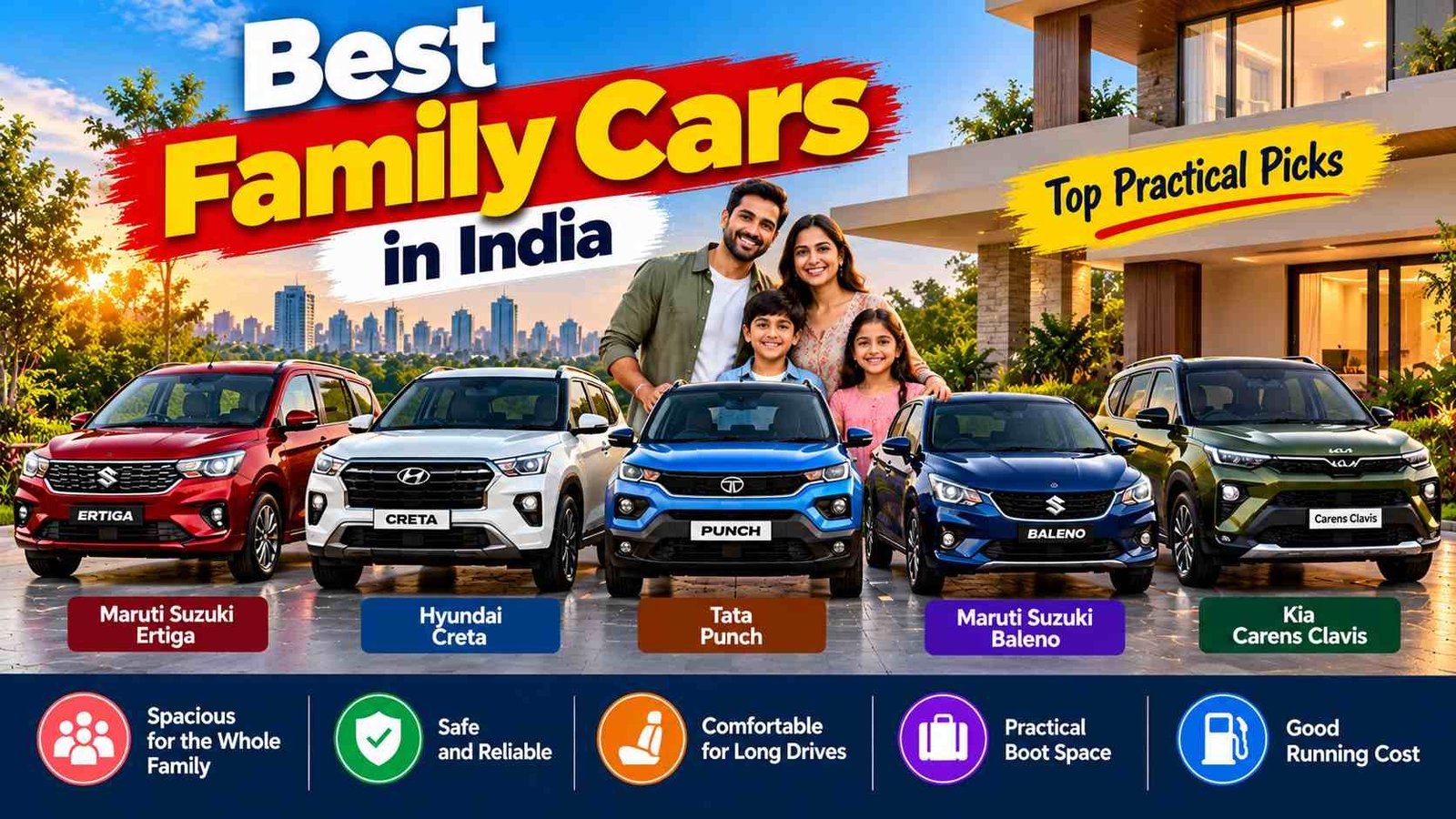
  • Best Family Cars in India: Top Practical Picks

    Best Family Cars in India: Top Practical Picks

    Choosing the right family car is about more than just price or mileage. A good family car should offer enough space, comfortable seating, useful features, good safety equipment and reasonable running costs.

    Indian families also have different needs. Some buyers prefer a compact car that is easy to drive in the city, while others need a spacious SUV or a three-row vehicle for larger families and frequent road trips.

    In this guide, we look at some of the best family cars in India and explain what each one is best suited for, so you can make a more informed buying decision.

    1. Maruti Suzuki Ertiga

    The Maruti Suzuki Ertiga is a practical choice for families who need three rows of seating and a seven-seat layout.

    Its spacious cabin, comfortable seating and practical design make it suitable for everyday family use as well as longer journeys. It is available with petrol and CNG powertrain options, giving buyers more flexibility based on their driving needs.

    The Ertiga is particularly useful for families who regularly travel with more passengers and want the practicality of a three-row vehicle without choosing a much larger MPV.

    Best for: Large families and buyers looking for a practical seven-seater.

    2. Hyundai Creta

    The Hyundai Creta is a popular SUV choice for families who want a combination of comfort, features, safety equipment and road presence.

    It offers a spacious cabin and a wide range of features, while its SUV design provides a useful driving position and ground clearance for everyday Indian road conditions.

    The Creta is available with multiple engine and transmission combinations, allowing buyers to choose a version that matches their driving requirements.

    Best for: Families looking for a comfortable and feature-rich SUV.

    3. Tata Punch

    The Tata Punch is a compact SUV-style car that can work well for smaller families and city users.

    Its compact dimensions make it easier to drive and park in busy urban areas, while its higher seating position and SUV-inspired design give it a practical character.

    The Punch also offers petrol and CNG options, depending on the variant, making it suitable for buyers with different running-cost priorities. Its safety equipment is another factor that can make it appealing to family buyers.

    Best for: Small families and city driving.

    4. Maruti Suzuki Baleno

    The Maruti Suzuki Baleno is a spacious premium hatchback that can be a practical choice for small and medium-sized families.

    It offers useful cabin space, a practical boot and compact dimensions that make it convenient for everyday urban driving.

    For buyers who do not need an SUV or a three-row vehicle, the Baleno offers a good balance of practicality, space, ease of use and running costs.

    Best for: Small and medium-sized families who prefer a hatchback.

    5. Kia Carens Clavis

    The Kia Carens Clavis is designed for families that want more cabin space, three-row practicality and a feature-rich experience.

    It is available with six- and seven-seat configurations depending on the variant, giving buyers more flexibility when choosing the right interior layout.

    Its three-row design makes it suitable for families who regularly travel with more passengers. Buyers should compare individual variants carefully because seating configuration, features and equipment can differ between versions.

    Best for: Larger families who need three rows and want a feature-rich family vehicle.

    Quick Comparison

    CarBest ForKey Highlight
    Maruti Suzuki ErtigaLarge familiesPractical seven-seat layout
    Hyundai CretaSUV buyersComfort, features and safety
    Tata PunchCity familiesCompact size and practical design
    Maruti Suzuki BalenoSmall familiesSpacious and practical hatchback
    Kia Carens ClavisLarger familiesSix- or seven-seat options

    Which Family Car Should You Choose?

    The right family car depends on the size of your family, your daily driving requirements, budget and preferred vehicle type.

    If you regularly travel with a larger family, the Maruti Suzuki Ertiga is worth considering because of its seven-seat layout and practical design.

    If you want an SUV with a comfortable cabin, modern features and a strong overall package, the Hyundai Creta is a good option to consider.

    For smaller families who mainly drive in the city, the Tata Punch can be a practical choice because of its compact size and SUV-style design.

    If you prefer a hatchback instead of an SUV, the Maruti Suzuki Baleno offers useful cabin space and everyday practicality.

    For families who need three rows and want more interior space and features, the Kia Carens Clavis is another option worth considering.

    What Should You Check Before Buying a Family Car?

    Don’t choose a family car based only on its appearance, mileage or features. Consider the following points before making a decision:

    • Cabin space: Make sure there is enough legroom and headroom for the people who will regularly use the car.
    • Seating capacity: If you have a larger family, consider whether you actually need six or seven seats.
    • Third-row comfort: If you are considering a three-row vehicle, check whether the third row is comfortable enough for your regular passengers.
    • Boot space: Check whether the boot can accommodate your luggage, especially when all seats are occupied.
    • Safety: Look at the available safety equipment and check the latest safety information for the exact variant you are considering.
    • Comfort: Pay attention to seat comfort, rear-seat space, suspension and overall ride quality.
    • Fuel costs: Compare petrol, CNG, hybrid or other available powertrain options based on your usage.
    • Maintenance: Consider servicing costs, spare-parts availability and the manufacturer’s service network.
    • On-road price: Always consider insurance, registration, taxes and other charges in addition to the listed ex-showroom price.
    • Parking and size: A large SUV or MPV may be comfortable for families but can be less convenient in crowded areas.
    • Test drive: A proper test drive is important to understand visibility, seating comfort, ride quality and driving position.

    Frequently Asked Questions

    Which is the best family car in India?

    There is no single best family car for everyone. The right choice depends on family size, budget, seating requirements, driving conditions and personal preferences.

    Which family car is best for a large family?

    A three-row or seven-seat vehicle such as the Maruti Suzuki Ertiga or Kia Carens Clavis can be a practical choice for larger families.

    Which family car is best for city driving?

    For smaller families who mainly drive in the city, compact cars such as the Tata Punch or Maruti Suzuki Baleno can be easier to drive and park.

    Is an SUV a good family car?

    Yes. SUVs can offer a comfortable driving position, useful ground clearance, good cabin space and a wide range of features. However, buyers should choose the vehicle size and seating configuration according to their actual needs.

    What is more important in a family car: mileage or space?

    Both are important, but the priority depends on your usage. Families that drive long distances frequently may benefit from better fuel efficiency, while larger families may need to prioritise cabin and boot space.

    Final Thoughts

    A good family car should make everyday travel easier, more comfortable and more practical.

    The Maruti Suzuki Ertiga is a practical option for larger families, the Hyundai Creta is a strong SUV choice, the Tata Punch works well for compact city use, and the Maruti Suzuki Baleno offers useful space in a hatchback package.

    For buyers who need three rows and more family-oriented practicality, the Kia Carens Clavis is another option worth considering.

    Before buying, compare the latest variants, features, safety information, running costs and on-road prices. A test drive is also recommended before making a final purchase decision.

    Views: 0

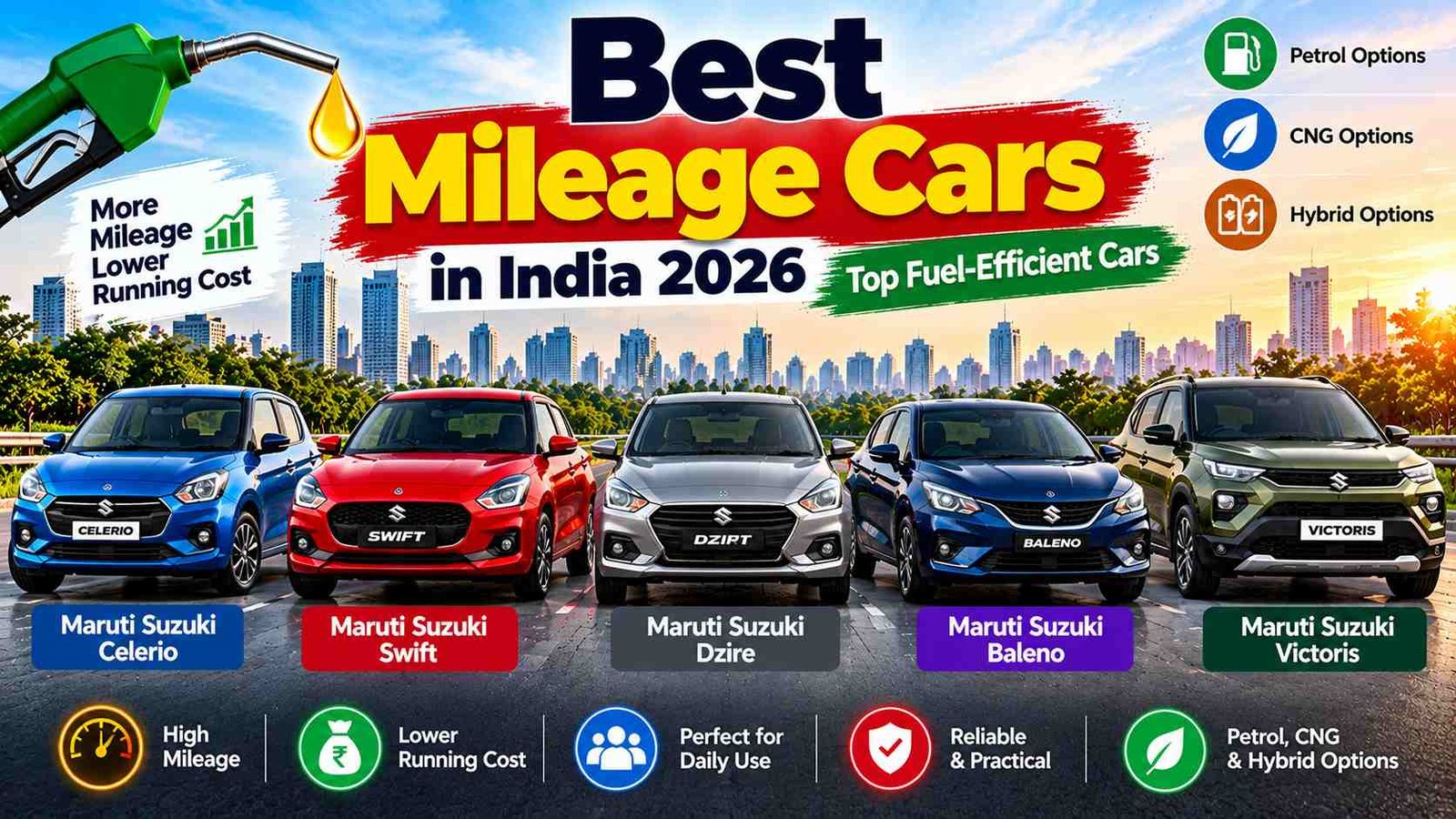
  • Best Mileage Cars in India 2026

    Best Mileage Cars in India 2026

    Fuel efficiency remains an important factor for many Indian car buyers, especially when fuel prices and daily running costs are considered. Today, buyers can choose from efficient petrol cars, CNG models and strong-hybrid vehicles.

    However, the highest claimed mileage does not automatically make a car the best choice. Your daily driving distance, traffic conditions, fuel type, maintenance costs and access to CNG refuelling also matter.

    In this guide, we look at some of the best mileage cars in India in 2026 and explain what each one is best suited for.

    1. Maruti Suzuki Celerio

    The Maruti Suzuki Celerio is one of the most fuel-efficient small cars available in India.

    Its petrol version offers an ARAI-rated efficiency of up to 26.00 km/l, while the CNG version offers up to 34.43 km/kg. Its compact size also makes the Celerio easy to drive in busy cities.

    Best for: City driving and buyers who want low running costs.

    2. Maruti Suzuki Swift

    The Maruti Suzuki Swift is a popular hatchback that combines compact dimensions with strong fuel-efficiency figures.

    The petrol version offers up to 25.75 km/l with the AMT transmission, while the CNG version offers a claimed efficiency of up to 32.85 km/kg. The petrol manual version is rated at around 24.8 km/l.

    Best for: City users and first-time buyers who want an efficient hatchback.

    3. Maruti Suzuki Dzire

    The Maruti Suzuki Dzire is a practical sedan that combines good fuel efficiency with useful cabin and boot space.

    Its petrol manual version offers a claimed efficiency of 24.79 km/l, while the AMT version is rated at 25.71 km/l. The CNG version offers up to 33.73 km/kg.

    Best for: Families who want a fuel-efficient sedan.

    4. Maruti Suzuki Baleno

    The Maruti Suzuki Baleno is a spacious premium hatchback available with petrol and CNG powertrains.

    The petrol manual version is rated at 22.35 km/l, while the AMT version is rated at 22.94 km/l. The CNG version offers a claimed efficiency of 30.61 km/kg.

    Best for: Buyers who want a spacious and efficient hatchback.

    5. Maruti Suzuki Victoris

    The Maruti Suzuki Victoris stands out by offering a strong-hybrid powertrain alongside petrol and CNG options.

    Its strong-hybrid version offers a claimed efficiency of up to 28.65 km/l. The Victoris also offers a CNG version with a claimed efficiency of 27.02 km/kg, giving buyers more choice depending on their driving needs.

    Best for: Buyers who want SUV practicality with strong fuel-efficiency potential.

    Quick Comparison

    CarFuel TypeKey Highlight
    Maruti Suzuki CelerioPetrol / CNGUp to 34.43 km/kg CNG
    Maruti Suzuki SwiftPetrol / CNGUp to 25.75 km/l petrol
    Maruti Suzuki DzirePetrol / CNGUp to 33.73 km/kg CNG
    Maruti Suzuki BalenoPetrol / CNGUp to 30.61 km/kg CNG
    Maruti Suzuki VictorisPetrol / CNG / HybridUp to 28.65 km/l strong hybrid

    Which Mileage Car Should You Choose?

    For low-cost city driving, the Maruti Suzuki Celerio CNG is an attractive option because of its high claimed CNG efficiency.

    If you want a more versatile everyday hatchback, the Maruti Suzuki Swift offers a good balance between efficiency, compact dimensions and usability.

    For families who prefer a sedan, the Maruti Suzuki Dzire is worth considering for its combination of efficiency and practical space.

    If cabin space is important, the Maruti Suzuki Baleno is a practical hatchback choice with both petrol and CNG options.

    For buyers who want an SUV with strong fuel-efficiency potential, the Maruti Suzuki Victoris strong hybrid is one of the more interesting options in its segment.

    What to Check Before Buying a Mileage Car

    Don’t choose a car based only on its claimed mileage. Consider:

    • Real-world efficiency: Actual mileage can be lower than certified figures.
    • Fuel type: Compare petrol, CNG and hybrid based on your usage.
    • Daily distance: High-efficiency cars make more sense when you drive regularly.
    • CNG availability: Check whether CNG stations are convenient in your area.
    • Maintenance: Consider servicing and long-term ownership costs.
    • On-road price: Insurance, registration and other charges add to the final cost.
    • Driving conditions: Heavy traffic, frequent short trips and extensive air-conditioning use can affect actual efficiency.

    Frequently Asked Questions

    Which is the best mileage car in India?

    There is no single best mileage car for everyone. The right choice depends on your fuel preference, daily driving distance, budget and vehicle requirements.

    Which CNG car has the best mileage?

    The Maruti Suzuki Celerio CNG offers a claimed efficiency of up to 34.43 km/kg, making it one of the most fuel-efficient CNG passenger cars in India.

    Which hybrid car offers good mileage?

    The Maruti Suzuki Victoris strong hybrid offers a claimed efficiency of up to 28.65 km/l, making it an interesting choice for buyers who want SUV practicality with strong fuel-efficiency potential.

    Is CNG better than petrol for mileage?

    CNG can offer lower running costs for buyers who drive frequently and have convenient access to CNG stations. However, the better choice depends on your annual driving distance, local fuel prices and refuelling convenience.

    Is claimed mileage the same as real-world mileage?

    No. Certified mileage is measured under controlled testing conditions. Actual mileage can vary depending on traffic, driving style, road conditions, weather, air-conditioning use and vehicle load.

    Final Thoughts

    Mileage is important, but it should not be the only factor when choosing a car.

    The Celerio is a strong choice for low-cost city driving, the Swift offers a good balance for everyday users, the Dzire is a practical family sedan, the Baleno provides more hatchback space, and the Victoris strong hybrid is an interesting option for buyers who want an efficient SUV.

    Mileage figures, variants, prices and features can change over time. Always check the latest specifications and claimed efficiency on the official manufacturer’s website or with an authorised dealer before making a purchase decision.

    Views: 0

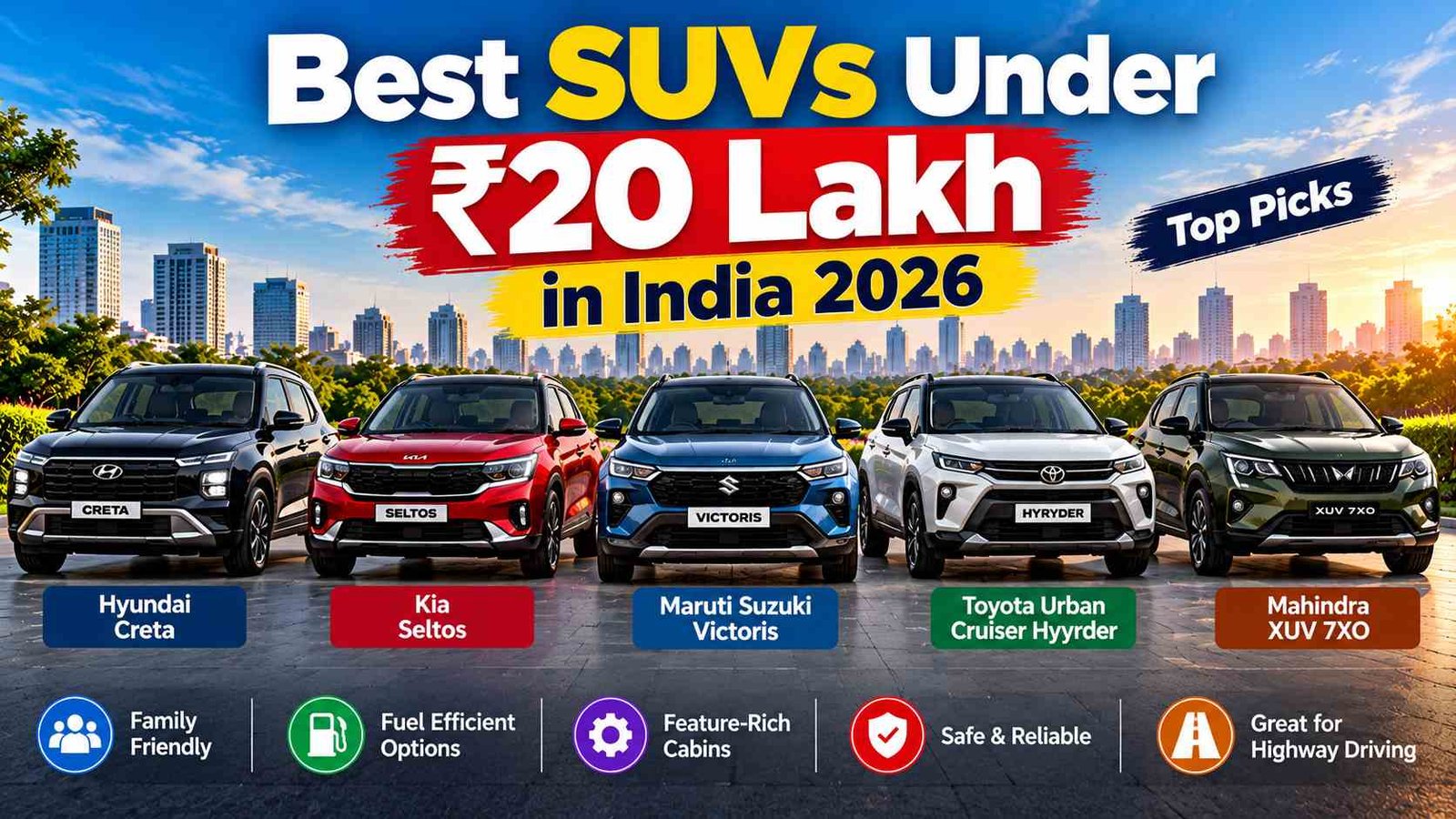
  • Best SUVs Under ₹20 Lakh in India 2026

    Best SUVs Under ₹20 Lakh in India 2026

    SUVs have become one of the most popular choices among Indian car buyers. With an ex-showroom budget of up to ₹20 lakh, buyers can choose from mid-size SUVs offering different combinations of space, comfort, performance, features and fuel efficiency.

    However, the best SUV depends on how you plan to use it. A city-focused buyer may prefer a refined and easy-to-drive SUV, while a family that travels frequently may prioritise cabin space, highway comfort and safety.

    In this guide, we look at some of the best SUVs with variants available within a ₹20 lakh ex-showroom budget in India in 2026 and explain what each one is best suited for.

    1. Hyundai Creta

    The Hyundai Creta is a strong all-rounder for buyers looking for a comfortable and feature-rich family SUV.

    It is available with petrol and diesel powertrains, with manual and automatic transmission options depending on the variant. Its comfortable cabin and balanced road manners make it suitable for both city and highway driving.

    Best for: Families looking for an all-round SUV.

    2. Kia Seltos

    The Kia Seltos is a good option for buyers who want a stylish SUV with a modern cabin and a wide range of features.

    It offers petrol and diesel engine choices, with manual and automatic transmission options depending on the variant. Some higher-end variants cost more than ₹20 lakh, so buyers should check the latest variant pricing.

    Best for: Buyers who prioritise design, features and driving experience.

    3. Maruti Suzuki Victoris

    The Maruti Suzuki Victoris is a modern mid-size SUV offering several powertrain choices.

    It is available with petrol, CNG and strong-hybrid options, while selected variants also offer ALLGRIP SELECT all-wheel drive. The strong-hybrid version can be particularly attractive for buyers who prioritise fuel efficiency.

    Best for: Family buyers looking for efficiency, features and versatility.

    4. Toyota Urban Cruiser Hyryder

    The Toyota Urban Cruiser Hyryder is an attractive option for buyers who want an SUV with strong fuel-efficiency potential.

    Its strong-hybrid powertrain can be particularly useful for city driving, where frequent stops and starts can increase fuel consumption in conventional petrol vehicles.

    Best for: Buyers who prioritise fuel efficiency and everyday practicality.

    5. Mahindra XUV 7XO

    The Mahindra XUV 7XO is aimed at buyers who want a larger SUV with more space, performance and technology.

    It is available with petrol and diesel powertrains, and several variants offer a 7-seat configuration. Higher variants can go beyond the ₹20 lakh ex-showroom budget, so buyers should check the latest pricing before choosing a specific variant.

    Best for: Larger families and buyers who regularly travel on highways.

    Quick Comparison

    SUVBest ForKey Highlight
    Hyundai CretaFamiliesBalanced all-round package
    Kia SeltosFeatures & stylePremium, feature-rich cabin
    Maruti Suzuki VictorisEfficiencyStrong-hybrid option
    Toyota Urban Cruiser HyryderFuel efficiencyStrong-hybrid powertrain
    Mahindra XUV 7XOLarge familiesSpace and 7-seat option

    Which SUV Should You Choose?

    If you want an SUV that balances comfort, features and everyday usability, the Hyundai Creta is a strong choice.

    For buyers who give more importance to styling and features, the Kia Seltos is worth considering.

    If fuel efficiency is a major priority, the Maruti Suzuki Victoris and Toyota Urban Cruiser Hyryder offer strong-hybrid options.

    For buyers who need more space and regularly travel with a larger family, the Mahindra XUV 7XO is a more suitable option, especially if you need a 7-seat SUV.

    What to Check Before Buying an SUV

    Before choosing an SUV, consider more than its size and features:

    • Safety: Check the available safety equipment and independent crash-test results where available.
    • Fuel type: Consider petrol, diesel, CNG or hybrid based on your yearly driving.
    • Space: Check rear-seat comfort and boot capacity for your regular usage.
    • Highway driving: If you travel frequently, consider engine performance, ride comfort and stability.
    • Service support: Check authorised service availability in your area.
    • Variant pricing: Make sure the exact variant you want fits your ₹20 lakh budget.
    • On-road price: Insurance, registration, taxes and other charges can significantly increase the final cost.

    Frequently Asked Questions

    Which is the best SUV under ₹20 lakh in India?

    There is no single best SUV for everyone. The right choice depends on your budget, family size, driving pattern, fuel preference and required features.

    Which SUV is best for families?

    The Hyundai Creta is a strong all-round family option, while the Mahindra XUV 7XO is worth considering if you need more space and a 7-seat configuration.

    Which SUV under ₹20 lakh offers good fuel efficiency?

    The Maruti Suzuki Victoris and Toyota Urban Cruiser Hyryder are particularly interesting for buyers who want strong-hybrid technology and better fuel-efficiency potential.

    Which SUV is good for highway driving?

    The Hyundai Creta, Kia Seltos and Mahindra XUV 7XO are worth considering for regular highway use because of their comfortable cabins and available petrol or diesel powertrains.

    Should I buy a petrol, diesel, CNG or hybrid SUV?

    It depends on your usage. Petrol can suit mixed or moderate driving, diesel can make sense for higher annual running, CNG can be useful for buyers with convenient refuelling access, while a strong hybrid can be attractive for buyers who spend a lot of time driving in cities.

    Final Thoughts

    The ₹20 lakh ex-showroom budget gives Indian buyers a wide range of SUV choices.

    The Hyundai Creta is a strong all-rounder, the Kia Seltos focuses on style and features, the Maruti Suzuki Victoris and Toyota Urban Cruiser Hyryder are attractive for efficiency, while the Mahindra XUV 7XO is better suited to buyers who need more space and a 7-seat option.

    Prices, variants, features and availability can change over time. Always check the latest specifications, variant price and on-road cost on the official manufacturer’s website or with an authorised dealer before making a purchase decision.

    Views: 0

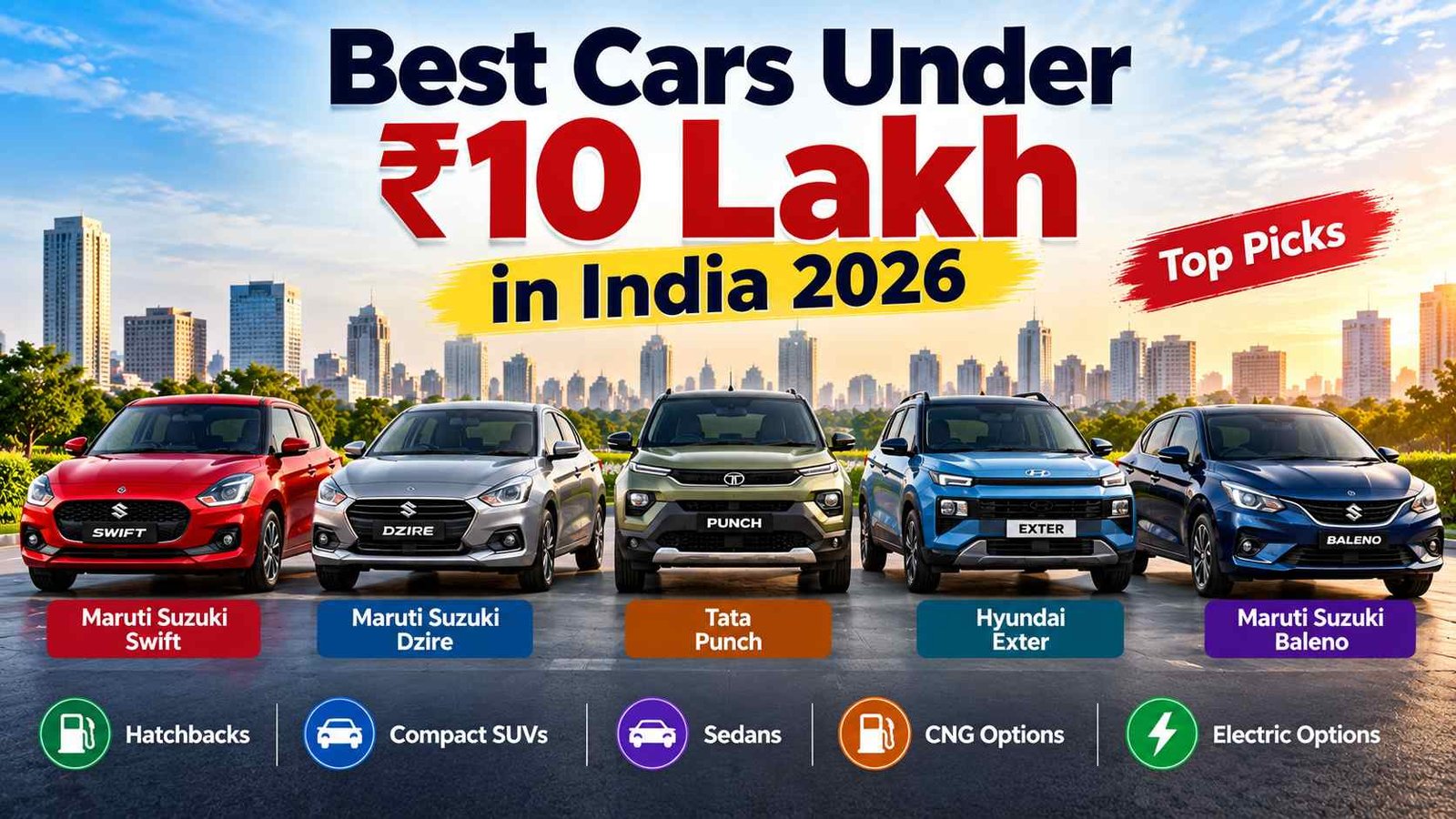
  • Best Cars Under ₹10 Lakh in India 2026

    Best Cars Under ₹10 Lakh in India 2026

    Finding a good car under ₹10 lakh is easier than ever in India. Buyers can choose from hatchbacks, compact SUVs, sedans and CNG options across this budget range.

    However, the cheapest car is not always the best choice. Fuel efficiency, safety, space, features, maintenance costs and everyday usability are all important when choosing a car.

    In this guide, we look at some of the best cars under ₹10 lakh in India in 2026 and explain what each one is best suited for.

    1. Maruti Suzuki Swift

    The Maruti Suzuki Swift is a popular choice for buyers who want a compact and easy-to-drive hatchback.

    It is available with petrol and CNG powertrains, while transmission options include manual and automatic choices depending on the variant. Its compact dimensions also make it convenient for city driving.

    Best for: City driving, fuel-conscious buyers and first-time car owners.

    2. Maruti Suzuki Dzire

    The Maruti Suzuki Dzire is a practical sedan with a comfortable cabin and useful boot space.

    It is available with petrol and CNG powertrains. Petrol variants offer manual and automatic options, while CNG variants are available with a manual transmission.

    Best for: Families and buyers who prefer a practical sedan.

    3. Tata Punch

    The Tata Punch offers an SUV-like driving position in a compact package.

    It is available with petrol and CNG powertrains, while the Punch EV provides an electric alternative for buyers looking for an EV. Only selected variants fall within a ₹10 lakh ex-showroom budget, so buyers should check the latest variant pricing.

    Best for: City users looking for a compact SUV-style car.

    4. Hyundai Exter

    The Hyundai Exter is a compact SUV designed mainly for urban use.

    It offers petrol and CNG powertrains, with manual and automatic options available on petrol variants. Its compact size makes it easy to drive and park in busy cities.

    Best for: City driving and buyers who want features in a compact SUV.

    5. Maruti Suzuki Baleno

    The Maruti Suzuki Baleno is a spacious premium hatchback with a practical cabin and efficient powertrain options.

    It is available with petrol and CNG powertrains and offers a good balance between everyday usability, cabin space and running costs.

    Best for: Buyers looking for a spacious and efficient hatchback.

    Quick Comparison

    CarBest ForKey Highlight
    Maruti Suzuki SwiftCity useCompact and efficient
    Maruti Suzuki DzireFamiliesPractical sedan
    Tata PunchSUV buyersHigher seating position
    Hyundai ExterCity useCompact SUV with useful features
    Maruti Suzuki BalenoHatchback buyersSpacious and efficient

    Which Car Should You Choose?

    If most of your driving is inside the city, the Maruti Suzuki Swift is an easy-to-use option.

    For family buyers who want a sedan and useful boot space, the Maruti Suzuki Dzire is worth considering.

    If you prefer an SUV-style driving position, the Tata Punch and Hyundai Exter are practical choices in this segment.

    For buyers who want more cabin space in a hatchback, the Maruti Suzuki Baleno is another strong option.

    What to Check Before Buying a Car Under ₹10 Lakh

    Before making a purchase, don’t compare cars only by their starting price. Check:

    • Safety: Look at the available safety equipment and independent crash-test information where available.
    • Fuel economy: Consider your daily driving distance and running costs.
    • Space: Check rear-seat comfort and boot space if you regularly travel with family.
    • Transmission: Choose manual or automatic based on your driving conditions.
    • Service costs: Check maintenance costs and service availability in your area.
    • On-road price: Registration, insurance, taxes and other charges can increase the final cost significantly.

    Frequently Asked Questions

    Which is the best car under ₹10 lakh in India?

    There is no single best car for everyone. The right choice depends on your budget, driving needs, preferred body style, fuel type and running costs.

    Which SUV is best under ₹10 lakh?

    The Tata Punch and Hyundai Exter are two practical compact SUV options to consider in this budget range.

    Which car under ₹10 lakh is good for families?

    The Maruti Suzuki Dzire is a practical family sedan, while the Tata Punch and Hyundai Exter are worth considering if you prefer an SUV-style vehicle.

    Which car under ₹10 lakh offers good fuel efficiency?

    Several cars in this segment offer petrol or CNG options with strong claimed efficiency. Actual mileage will depend on traffic, driving style, road conditions and vehicle load.

    Should I buy a petrol, CNG or electric car?

    It depends on your daily usage and refuelling or charging access. CNG can make sense for high daily running, while an EV can be attractive if you have convenient home or public charging.

    Final Thoughts

    The ₹10 lakh budget offers a wide range of cars in India. The Maruti Suzuki Swift is well suited to city users, the Dzire is a practical family sedan, the Tata Punch and Hyundai Exter offer SUV-style practicality, and the Baleno is a spacious hatchback option.

    Prices, variants, features and availability can change over time. Always check the latest ex-showroom and on-road price, features and specifications on the official manufacturer’s website or with an authorised dealer before making a purchase decision.

    Views: 0

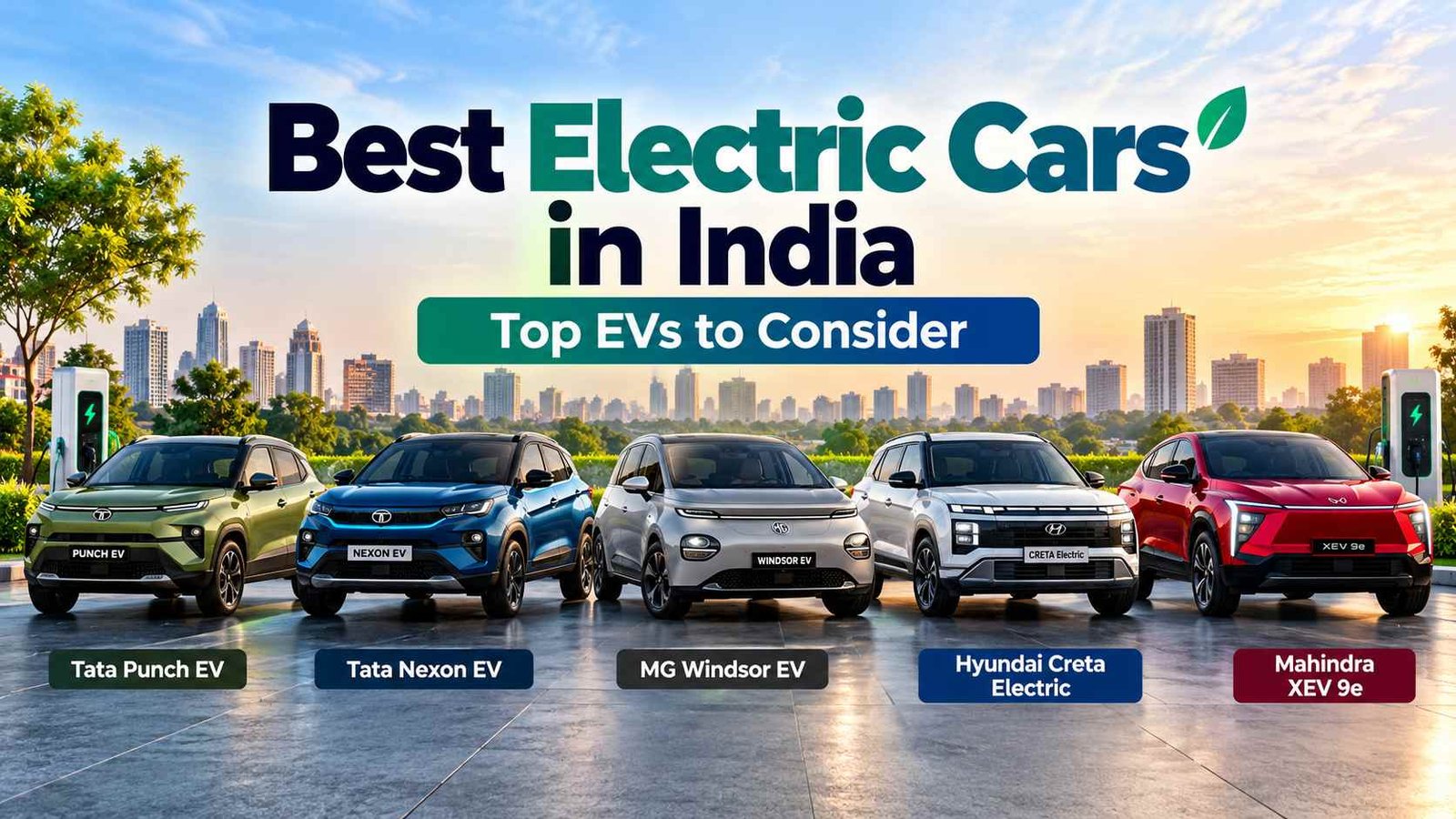
  • Best Electric Cars in India: Top EVs to Consider

    Best Electric Cars in India: Top EVs to Consider

    Electric cars are becoming a more practical choice for Indian buyers, with options now available across different price ranges and body styles. From compact city EVs to premium electric SUVs, buyers have more choices than before.

    Choosing an electric car is about more than just claimed range. Battery size, charging speed, everyday usability, space, features, service support and your regular driving needs are all important factors.

    In this guide, we look at some of the best electric cars worth considering in India in 2026, and explain what each one is best suited for.

    1. Tata Punch EV

    The Tata Punch EV is a compact electric SUV that is well suited to city driving.

    The 40 kWh version offers an ARAI-certified range of up to 468 km. It is a practical option for buyers who want a compact EV with SUV-style seating.

    Best for: City driving and first-time EV buyers.

    2. Tata Nexon EV

    The Tata Nexon EV is a popular electric SUV for everyday use.

    Its 45 kWh version has a claimed range of up to 489 km. It offers a good balance of space, features and practicality for city and highway driving.

    Best for: Families and everyday use.

    3. MG Windsor EV

    The MG Windsor EV focuses on comfort, space and a feature-rich cabin.

    Its 52.9 kWh battery version offers a claimed range of up to 449 km. It is worth considering if cabin comfort is a major priority.

    Best for: Comfort and spaciousness.

    4. Hyundai Creta Electric

    The Hyundai Creta Electric brings the popular Creta name into the EV segment.

    It is available with 42 kWh and 51.4 kWh battery options, with the larger battery offering a claimed range of up to 510 km.

    Best for: Families looking for a premium electric SUV.

    5. Mahindra XEV 9e

    The Mahindra XEV 9e is a larger, more premium electric SUV.

    It is available with 59 kWh and 79 kWh battery options. The 79 kWh version offers an ARAI-certified range of up to 656 km.

    Best for: Premium buyers looking for long range.

    Quick Comparison

    Electric CarBest ForKey Highlight
    Tata Punch EVCity useCompact electric SUV
    Tata Nexon EVEveryday useUp to 489 km claimed range
    MG Windsor EVComfortSpacious cabin
    Hyundai Creta ElectricFamiliesUp to 510 km claimed range
    Mahindra XEV 9ePremium buyersUp to 656 km certified range

    How to Choose the Right EV

    Before buying an electric car, consider:

    • Real-world range: Everyday range can differ from certified figures.
    • Charging: Check home-charging options and public chargers near your regular routes.
    • Battery warranty: Check the warranty period and coverage.
    • Service network: Make sure authorised service centres are accessible.
    • Daily driving: Choose an EV based on your actual usage rather than range alone.

    Frequently Asked Questions

    Which is the best electric car in India?

    There is no single best EV for everyone. The right choice depends on your budget, daily driving needs and charging access.

    Which EV is best for city driving?

    The Tata Punch EV is a practical option for city use because of its compact size and SUV-style seating.

    Can electric cars be used for long trips?

    Yes. Modern EVs can be used for long-distance travel, but you should plan charging stops before the journey.

    What should I check before buying an EV?

    Check the real-world range, charging options, battery warranty, service network and your daily driving requirements.

    Final Thoughts

    The best electric car depends on your needs. The Tata Punch EV suits city users, the Nexon EV offers a balanced package, the MG Windsor EV focuses on comfort, the Creta Electric suits families, and the XEV 9e targets premium buyers.

    Prices, features, variants and range figures can change over time. Always check the latest information from the official manufacturer or an authorised dealer before making a purchase.

    Views: 0

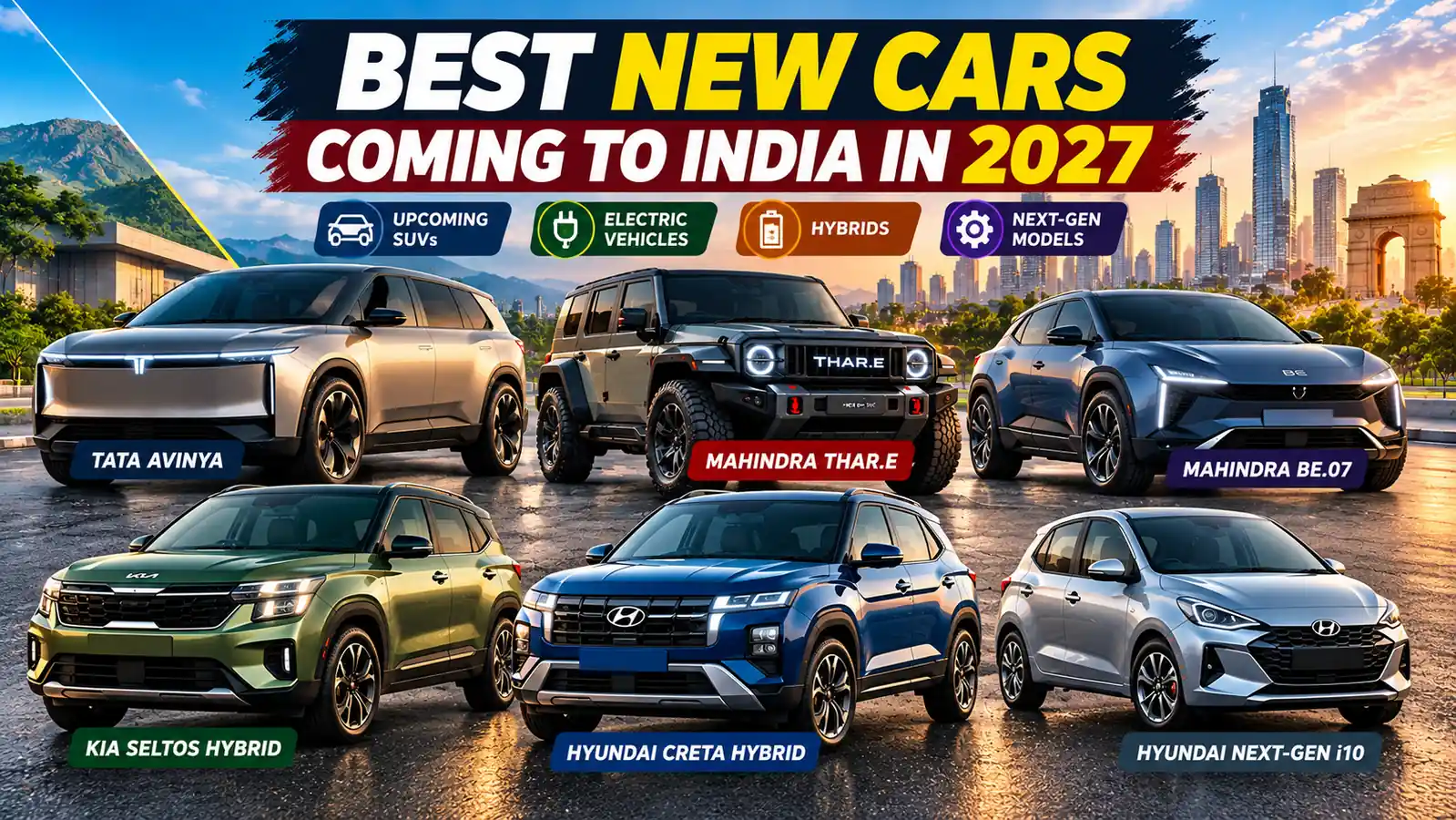
  • Best New Cars Coming to India in 2027: Upcoming EVs, Hybrids & More

    Best New Cars Coming to India in 2027: Upcoming EVs, Hybrids & More

    The Indian car market is expected to see several important new launches in 2027, with electric vehicles, hybrid SUVs and next-generation models likely to give buyers more choices.

    Several manufacturers are working on new products for India, including Tata Motors, Mahindra, Hyundai and Kia. However, launch dates, prices and specifications can change, especially when a model is still under development.

    In this guide, we look at some of the most interesting new cars expected in India around 2027, what is currently known about them and what buyers should consider before waiting for an upcoming model.

    Important: Upcoming-car information can change before launch. Expected prices, specifications and timelines should not be treated as final unless officially confirmed by the manufacturer.

    The 2027 Cars Worth Watching

    Upcoming CarPowertrainWhat Makes It Interesting
    Tata AvinyaElectricPremium EV based on Tata’s next-generation EV strategy
    Mahindra Thar.eElectricRugged electric SUV with an off-road focus
    Mahindra BE.07ElectricPremium electric SUV from Mahindra’s BE family
    Kia Seltos HybridStrong HybridHybrid option for the popular midsize SUV
    Hyundai Next-Generation CretaPetrol/Hybrid/Diesel expectedMajor generational update with new technology
    Hyundai Next-Generation i10Petrol/CNG expectedNew-generation small hatchback
    Renault New Compact SUVPetrol/Hybrid/EV options under considerationPotential new entry in the compact SUV segment

    1. Tata Avinya

    The Tata Avinya is one of the most ambitious electric-vehicle projects from Tata Motors and remains one of the most interesting upcoming premium EV programmes for India.

    Tata says the Avinya concept is based on its Gen 3 EV architecture and that the Avinya will be introduced to the market by 2027. The concept focuses on premium electric mobility, spacious interiors, advanced technology and a more software-focused ownership experience.

    Tata’s original Avinya concept also highlighted very fast charging capability and a long-range focus. However, those concept-level figures should not be treated as final production specifications until Tata confirms them for the India-spec model.

    Why the Avinya is worth watching

    • Premium electric positioning
    • Next-generation EV architecture
    • Spacious cabin concept
    • Advanced software and connectivity
    • Fast-charging focus
    • Potential long-distance EV capability

    Best suited for: Buyers interested in a premium EV and willing to wait for Tata’s next-generation electric platform.

    2. Mahindra Thar.e

    The Mahindra Thar.e could take the familiar Thar name into the electric SUV era.

    Mahindra’s Thar.e concept was designed around an electric off-road SUV theme, and current automotive industry listings continue to place the production model around 2027. The expected configuration includes a four-wheel-drive layout and a dual-motor electric setup, although final production specifications have not yet been confirmed by Mahindra.

    The concept is particularly interesting because it combines an electric powertrain with the rugged character associated with the Thar name.

    What could make it special?

    • Fully electric powertrain
    • Four-wheel-drive capability
    • SUV-focused design
    • High ground-clearance concept
    • Off-road-oriented positioning
    • Potential dual-motor setup

    Best suited for: Buyers who want an electric SUV with a more rugged and adventure-focused character.

    3. Mahindra BE.07

    The Mahindra BE.07 is another important electric SUV from Mahindra’s dedicated BE family.

    The BE.07 was originally announced as part of Mahindra’s INGLO-based electric SUV strategy. Current upcoming-car listings continue to track the model for 2027, although buyers should check Mahindra’s latest communication before treating the launch timing as final.

    The BE.07 is expected to target buyers looking for a more premium electric SUV with modern design, technology and strong performance.

    What could make the BE.07 interesting?

    • Dedicated EV architecture
    • Premium SUV positioning
    • Futuristic design
    • Spacious cabin
    • Connected technology
    • Strong electric performance

    Best suited for: Buyers looking for a premium electric SUV rather than a conventional petrol or diesel model.

    4. Kia Seltos Hybrid

    The Kia Seltos Hybrid could become one of the most interesting hybrid SUV additions to India’s midsize SUV segment.

    Kia showcased the India-bound Seltos Hybrid at the 2026 Paris Motor Show, and current industry reporting points to an India launch in 2027. Kia has also previously indicated a clear direction to introduce hybrid technology in the Seltos.

    However, the exact India-spec powertrain, price and launch date should still be treated as subject to confirmation. Current reporting suggests the India model could use a locally adapted hybrid setup rather than simply copying the specifications of another market.

    Why buyers may be interested

    A strong hybrid can appeal to buyers who want better fuel efficiency without depending entirely on external charging infrastructure.

    It could be particularly relevant for:

    • Daily city driving
    • Regular highway travel
    • SUV buyers
    • Buyers not ready to switch to a full EV
    • People looking for improved fuel efficiency

    Best suited for: Buyers who want an electrified SUV but prefer the convenience of a hybrid powertrain.

    5. Hyundai Next-Generation Creta

    The next-generation Hyundai Creta is expected to be one of Hyundai’s major India launches around 2027.

    Hyundai has confirmed plans for a next-generation Creta for India. Industry reports indicate that the new model is expected to receive a major redesign and could introduce a strong-hybrid powertrain alongside petrol and diesel options.

    The next-generation model is expected to bring a redesigned exterior and interior, updated technology and an expanded feature package. However, final India-specific specifications and pricing have not yet been confirmed.

    What could change?

    • New exterior design
    • Updated interior
    • New infotainment and connected technology
    • More advanced safety and driver-assistance features
    • Petrol and diesel options
    • Potential strong-hybrid option

    Best suited for: Buyers who want a popular midsize SUV but are not in a hurry to purchase their next car.

    6. Hyundai Next-Generation i10

    Hyundai is also preparing a next-generation i10 for India.

    Hyundai confirmed plans for next-generation versions of the Creta and i10, while current industry reports expect the new i10 to arrive around late 2027. Details are still limited, so the final design, specifications and equipment should be confirmed closer to launch.

    The new i10 is expected to continue focusing on the small-car segment, with petrol and CNG powertrains likely to remain important.

    What could change?

    • New exterior design
    • Redesigned interior
    • Updated technology
    • Improved safety equipment
    • Petrol and CNG options expected
    • Manual and automatic options may continue

    Best suited for: Buyers looking for a compact city car who can afford to wait for a new generation.

    7. Renault’s Next Compact SUV

    Renault is also planning to expand its Indian SUV range with another compact SUV.

    Industry reporting indicates that Renault is developing a new sub-four-metre SUV for India, with petrol, hybrid, CNG and electric powertrains being considered. The model is expected around 2027, although the final name, specifications and powertrain combination are not yet confirmed.

    The new model could give Renault another entry into one of India’s most competitive SUV segments.

    Why it could be important

    • Compact SUV format
    • Potentially broad powertrain choice
    • Focus on Indian market requirements
    • Could sit below the Duster
    • Potential hybrid and EV technology

    Best suited for: Buyers interested in a compact SUV and willing to consider a newer alternative to established models.

    Why 2027 Could Be Important for Indian Car Buyers

    The biggest change may not simply be the number of new models. It could be the wider choice of powertrains.

    Indian buyers are increasingly able to choose between:

    • Petrol
    • Diesel
    • CNG
    • Strong hybrid
    • Fully electric

    This gives buyers more flexibility depending on their driving pattern.

    Someone who drives mostly in cities may prefer a hybrid or EV, while a buyer who regularly travels long distances may still prefer a petrol, diesel or hybrid vehicle depending on fuel availability and running costs.

    EV vs Hybrid: Which Makes More Sense?

    There is no single answer for every buyer.

    An EV may make sense if:

    • You have reliable home or workplace charging.
    • Most of your driving is within the city.
    • You want to reduce dependence on petrol or diesel.
    • You are comfortable planning longer trips around charging stops.

    A hybrid may make sense if:

    • You frequently drive long distances.
    • Charging access is limited.
    • You want improved fuel efficiency.
    • You prefer a petrol-based vehicle with electric assistance.

    The right choice depends on your daily distance, charging access, fuel costs, ownership period and local driving conditions.

    Should You Wait for a 2027 Car?

    Waiting can be a good decision if your current car is reliable and you are specifically interested in a new technology or generation.

    Waiting may make sense when:

    • Your current car is working well.
    • You do not urgently need a replacement.
    • You want an EV or hybrid.
    • You are interested in a specific upcoming model.
    • Your preferred segment is about to receive major new products.

    Buying an existing model may be better when:

    • You need a car immediately.
    • A current model already meets your requirements.
    • The upcoming model has an uncertain timeline.
    • You can get an attractive deal on an existing car.
    • You prefer proven technology and an established service network.

    The smartest approach is to compare an upcoming model with at least two existing alternatives before making a final decision.

    What Should You Check Before Booking an Upcoming Car?

    An upcoming car can look exciting on paper, but buyers should not make a decision based only on launch hype.

    1. Final Price

    Expected prices can change significantly before launch. Compare the final ex-showroom and on-road price once the manufacturer announces them.

    2. Real-World Efficiency

    For petrol and hybrid cars, do not rely only on claimed fuel-efficiency figures.

    For EVs, compare claimed range with independent real-world tests when reliable data becomes available.

    3. Charging Infrastructure

    If you are considering an EV, check whether dependable charging is available at home, work and along the routes you regularly use.

    4. Battery Warranty

    For an EV or hybrid, check battery warranty coverage, exclusions and the manufacturer’s terms before buying.

    5. Safety

    Look at crash-test results, standard safety equipment, airbags, electronic stability control and available driver-assistance technology.

    6. Service Network

    A new technology is useful only when the manufacturer can support it properly.

    Check service availability in your city and the expected maintenance requirements.

    7. Resale Value

    New powertrain technology can affect resale values differently from established petrol and diesel models.

    Consider how long you plan to keep the vehicle.

    8. First-Batch Ownership

    If you are buying a completely new generation or technology, you may want to wait for early owner feedback before making a decision.

    This can reveal real-world issues that are not obvious during a launch event or showroom visit.

    Frequently Asked Questions

    Which are the most interesting new cars coming to India in 2027?

    Some of the most interesting models currently expected around 2027 include the Tata Avinya, Mahindra Thar.e, Mahindra BE.07, Kia Seltos Hybrid and next-generation Hyundai Creta. Hyundai’s next-generation i10 and Renault’s planned compact SUV are also worth watching.

    Which upcoming cars in 2027 are expected to be electric?

    The Tata Avinya, Mahindra Thar.e and Mahindra BE.07 are among the electric models worth watching. However, final launch schedules and production specifications can change before market introduction.

    Is the Kia Seltos Hybrid coming to India?

    The India-bound Seltos Hybrid has been showcased and current reporting points to an India launch in 2027. However, Kia has not yet confirmed every India-specific specification and the exact launch timing should be checked closer to the event.

    Will the Hyundai Creta get a hybrid version?

    The next-generation Creta is expected to receive a strong-hybrid option alongside other powertrains. The hybrid version has been widely reported for 2027, but final India-specific specifications and pricing should be confirmed by Hyundai.

    Is the Tata Avinya launching in 2027?

    Tata’s official Avinya information says the vehicle will be introduced to the market by 2027. The final production model, specifications and pricing should be confirmed by Tata closer to launch.

    Should I buy an EV or hybrid in 2027?

    It depends on your driving pattern. An EV can make sense if you have convenient charging access and mostly drive in areas with good charging coverage. A hybrid can be attractive if you want improved efficiency but still want the convenience of conventional refuelling.

    Final Thoughts

    2027 could be an important period for India’s automotive market, particularly as manufacturers expand their electric, hybrid and next-generation vehicle portfolios.

    The Tata Avinya and Mahindra’s upcoming electric SUVs could bring more choices to the EV market, while the Kia Seltos Hybrid and next-generation Hyundai Creta could make hybrid technology more accessible to mainstream SUV buyers.

    At the same time, upcoming models such as Hyundai’s next-generation i10 and Renault’s planned compact SUV could bring fresh competition to more affordable segments.

    However, an expected launch is not the same as a confirmed launch. Prices, specifications, features and timelines can change.

    The best approach is to follow official manufacturer announcements, compare upcoming models with existing alternatives and consider your total ownership requirements before deciding whether waiting is worthwhile.

    Views: 0